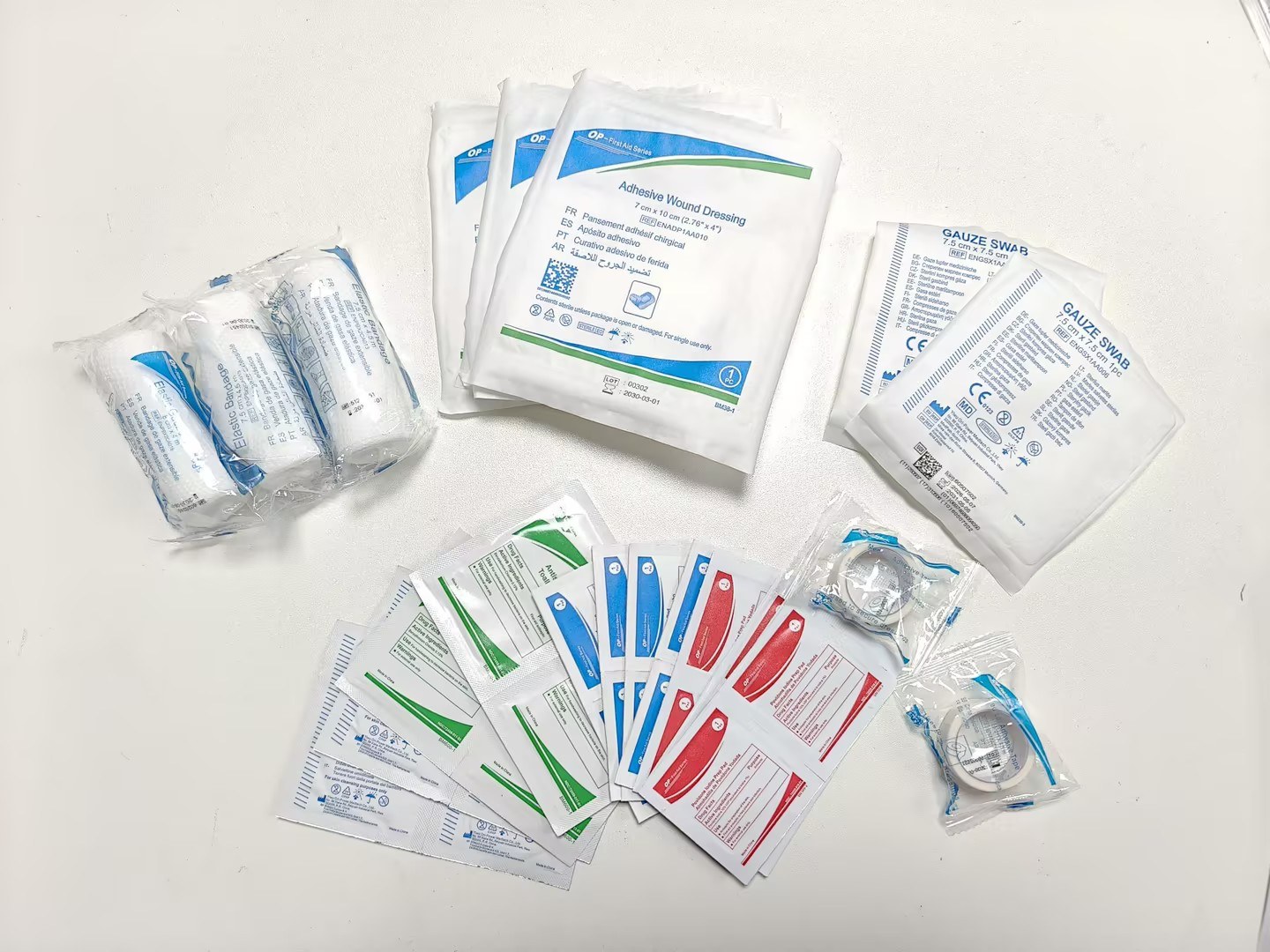
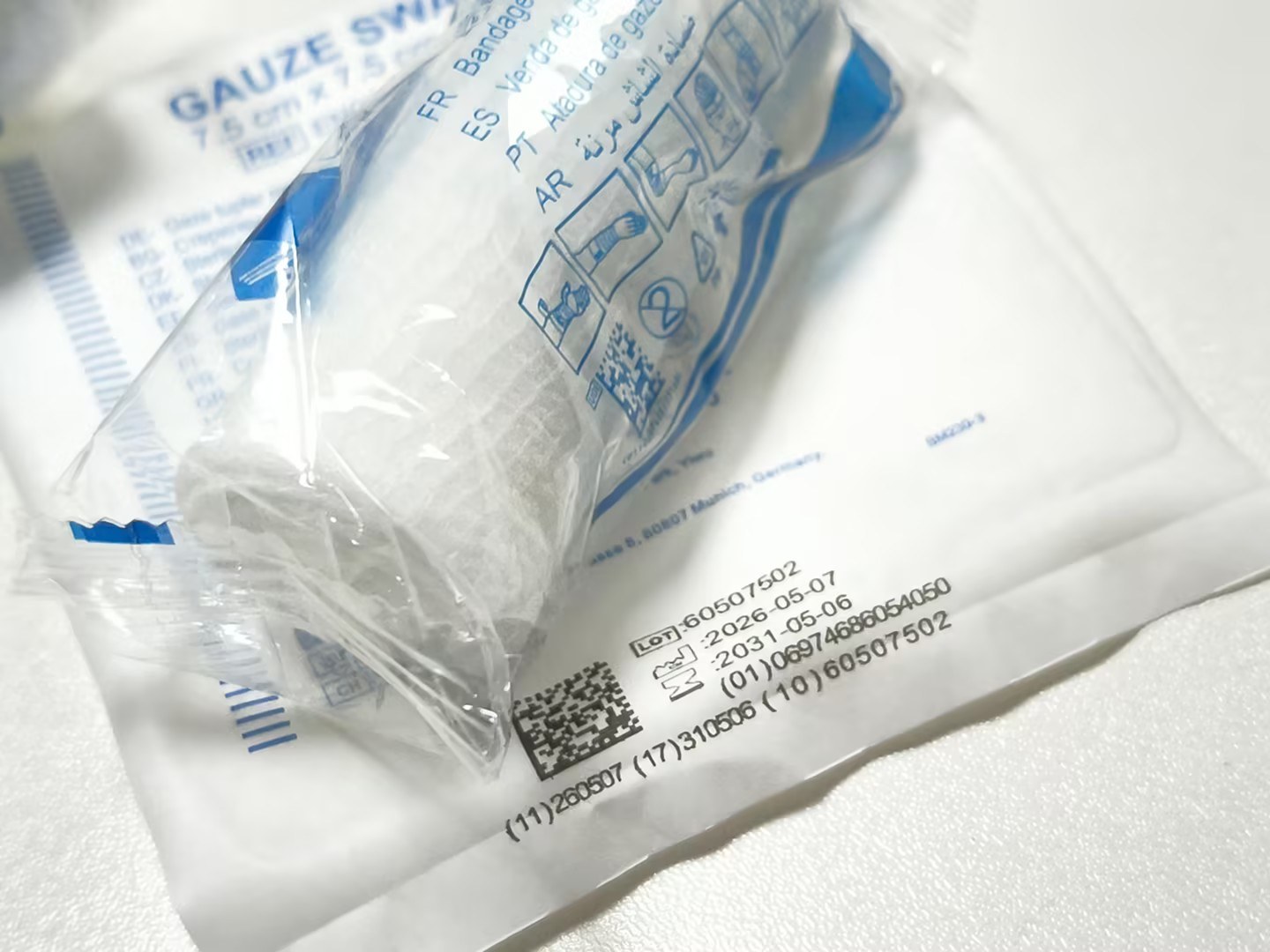
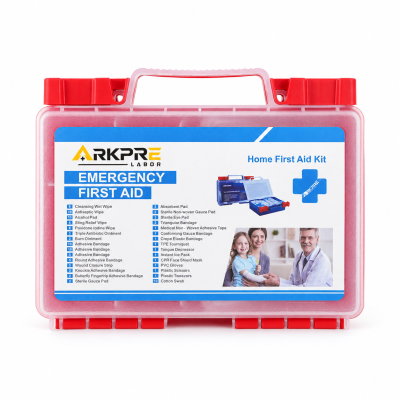
Essential medical consumables and replacement first aid components — wound care, bandages, gauze, dressings, tapes and refill supplies to restock and maintain every first aid kit.
Wound Care Supplies Wholesale: How to Build a Range That Sells in 2026
Nov 17,2026
A pharmacy expanding its first aid shelf and an industrial distributor replenishing workplace cabinets may both buy gauze, dressings and tape. Their customers can need different sizes, sales packs and reorder quantities.
A successful wound care supplies wholesale range connects product suitability with reliable replenishment. Buyers need clear specifications, packaging that fits their sales channel and a supplier able to support the same configuration on repeat orders. Those decisions affect stock availability, customer confidence and the cost of serving each account.
ORI-POWER brings together medical consumables and complete first aid kits, with selected components produced in-house alongside assembly and packaging. That combination gives distributors a practical basis for discussing individual products, refill packs and complete kits within one sourcing project.
Quick answer: Build the range around four purchasing functions — cleansing, bleeding control, covering and fixation. Start with a compact assortment of clearly specified products, verify market requirements, and set purchasing quantities around demand, delivery time and usable shelf life.
These functions organize a catalog. Treatment priorities depend on the injury. Life-threatening bleeding requires immediate action, and tourniquets have a specific role in severe limb bleeding.
Wound Care Supplies Wholesale: The Core Range Buyers Expect
Start with a channel-specific assortment. Pharmacy buyers may prioritize readable consumer packaging and convenient quantities. Industrial buyers may prioritize refill compatibility, consistent component specifications and economical case packs.
Build the opening range from customer requests and comparable order histories. Rank products by expected consumption, repeat-order potential and contribution after fulfillment. Expand the range as sales establish which sizes and formats customers actually need.
Purchasing function
Example products
Illustrative opening SKU count
Main margin consideration
Replenishment driver
Cleansing
Wound-cleansing products and first aid antiseptic wipes with appropriate labeling
2
Sachet, formulation and sales-pack cost
Consumption and expiry
Bleeding control
Specified absorbent or pressure dressings, with a separate trauma option where demanded
3
Model-specific cost and demand
Use, kit replacement and expiry
Covering
Sterile gauze, nonadherent pads, adhesive dressings and a selected burn-care product
7
Size mix, packaging and expiry exposure
Dressing consumption and refill demand
Fixation
Medical tape, conforming bandages and retention products
4
Material, roll length and carton efficiency
Consumption and local pack preferences
The 16-SKU assortment is an illustrative starting point. Set quantities and financial targets using your own demand and cost data. Classify each SKU once in sales reporting, even where it serves several functions.
Organize the opening range around four purchasing functions.
Choose Specifications Customers Can Reorder
Cleansing products. Record the intended application, formulation, concentration where relevant, wipe dimensions and sachets per box. Skin-preparation pads, surface disinfectants and first aid antiseptic products have different uses. In the US, first aid antiseptics fall within a drug framework, including applicable OTC monograph conditions. Check the exact formulation and claims before adding a wipe to the range.
Gauze and absorbent pads. Define woven or nonwoven construction, dimensions, ply or material weight where relevant, sterile status and units per sealed pack. Compare quotations using the same base unit. A box of 20 pads and a box of 20 packs containing two pads each carry different quantities.
Adhesive dressings. Begin with the shapes and sizes customers request most often. Specify backing material, pad dimensions, adhesive characteristics and supported claims such as water resistance. A clearly differentiated assortment is easier to explain than several near-identical packs.
Burn-care products. Review the product's labeled indications, instructions and intended user. Keep merchandising consistent with first aid guidance on cooling and assessment. Red Cross guidance addresses cooling burns and appropriate covering, so promotional copy should make those priorities clear.
Tourniquets and specialist trauma products. Carry these where there is an identified emergency-response customer base. Keep model identity, authenticity, documentation and training support visible. Red Cross guidance places tourniquets in the context of life-threatening bleeding from an arm or leg.
Connect Consumables to the Customer's Existing Kits
ORI-POWER's product families include ARKPRE Labor for workplaces, ARKPRE Drive for vehicles and Raismile Care for home use. These application ranges provide a starting point for discussing which wound-care components belong in each customer assortment.
For example, a distributor could propose a retail gauze pack for pharmacies and a refill format for workplace accounts. If both use an identical approved pad, the component specification can be shared while the sales packs receive separate SKUs. Check labeling, quantities and market requirements for each format. This is a proposed merchandising approach that should be confirmed against the actual product configuration.
Wound Care Supplier Selection: Dressings, Antiseptics and Pack Configurations
A wound care supplier should be able to connect a quotation to a precise product specification and the documents supporting its sale in the target market.
Send every bidder the same request. Include dimensions, material, sterile status, intended use, sales-pack quantity, destination country, language and remaining shelf life required at delivery.
Supplier evidence
What the buyer should verify
Business and manufacturing identity
Which entity manufactures, packs, sterilizes and sells each product
Quality-system certification, where claimed
Entity, site, scope, validity and issuing body
Product conformity documents
Exact model, responsible manufacturer and relevant market
Performance reports
Product tested, method, acceptance limits and relevance to advertised claims
Sterility and packaging evidence
Applicable sterilization validation, barrier integrity and shelf-life support
Lot and expiry records
Ability to trace supplied units and handle affected batches
Change-control agreement
Written approval before changes to materials, formulation, source or pack configuration
Match document review to the product. Under EU classification guidance, wound-dressing classification depends on intended purpose. Basic barriers, microenvironment-managing dressings and products for deeper wounds can follow different classes, while other rules may apply to particular compositions.
ORI-POWER describes incoming checks covering dimensions, quantities, packaging and batch information, plus selected performance testing such as absorbency and adhesion. Its supply-chain process also links key material lots with receiving and finished-product records. These are useful capabilities to evaluate through SKU-specific reports and traceability examples during supplier approval.
For pack configurations, quote the three levels explicitly. For example, one sealed two-pad pouch is the base pack, ten pouches make a sales box, and twenty sales boxes make a shipping carton. Each carton then contains 400 pads. Put the conversion on the quotation and warehouse record.
Record dimensions, sterile status and units per sealed pack before quoting.
Free Samples of Wound Care Supplies: How to Evaluate Before a Bulk Order
When requesting free samples of wound care supplies, agree on the sample type, quantity, shipping cost and any custom-development charge. A sample offer should identify which commercial specification it represents.
Use a documented evaluation process:
Identify the sample. Record the model, lot, date information and whether the packaging is production-equivalent.
Check the specification. Measure dimensions and count pads, packs or rolls. Compare construction and labeling with the quotation.
Inspect packaging. Examine seals, corners, opening features, print readability and protection during transport.
Assess handling. Use a controlled demonstration to review opening, dispensing and compatibility with the intended kit or shelf position.
Review performance evidence. Ask for the reports supporting absorbency, adhesion, skin compatibility, sterility and other relevant claims.
Approve a reference. Retain an identified sample and record the specification revision and agreed acceptance criteria.
A visual check or simple handling demonstration provides limited information. Sterility, biocompatibility and clinical claims require appropriate evidence. Separate samples opened for evaluation from saleable stock.
For an ORI-POWER project, request samples in the intended sales format and ask which relevant checks can be documented. Its OEM/ODM workflow includes prototype review, compliance coordination, inspection and replenishment. Use those stages to agree a sample approval record that carries through to the production order. Sample charges and availability should be confirmed for the requested configuration.
Common procurement problems include approving an unprinted prototype but buying a printed version, comparing unequal pack counts, and accepting a sample without confirming whether the same materials will be used in production. Address those points in the purchase specification.
Wholesale Wound Care Supplies: MOQ, Shelf Life and Label Rules
MOQ for wholesale wound care supplies can arise at several levels. Ask separately about product manufacturing, individual sachet printing, retail cartons, language versions and mixed-product assembly.
Order format
What to confirm
Standard stocked boxes
MOQ per SKU, available lots and expiry dates
Branded retail packaging
Print-run minimum and ownership of unused packaging
Custom individual wrappers
Artwork approval, print minimum and any validation implications
Mixed refill assortment
Component availability, assembly minimum and traceability method
ORI-POWER offers customization across contents, labels, retail packaging and refill formats. This gives a brand scope to develop a recognizable product presentation while planning how replacement items will be ordered. Ask for separate quotations for standard packs and custom artwork so setup costs and minimums are visible.
Avoid choosing a quantity solely to reach a price break. If demand is 100 boxes monthly and an order contains 1,200 boxes, that purchase represents 12 months of demand before allowing for uncertainty or growth. Compare it with the shelf life remaining when customers receive the goods.
Agree the remaining shelf life at a defined delivery point. WHO guidance addresses this as a risk-based purchasing decision. Total shelf life, transport time, storage and expected use all matter. Its example thresholds should be interpreted in their stated context.
For a fictional product with a 36-month labeled shelf life, a lot already 10 months old has 26 months remaining. After two months of transit and receiving, 24 months remain. The contract should identify whether its acceptance threshold applies at dispatch, port arrival or warehouse receipt.
Use first-expiry, first-out allocation for dated products, with customer-specific shelf-life checks before dispatch. WHO warehouse guidance distinguishes this from receipt-based FIFO.
ORI-POWER's supply-chain page describes batch and expiry alerts, core-SKU safety stock and forecast-based production planning. For repeat business, translate those capabilities into agreed delivery windows, eligible lots and remaining-shelf-life terms. Vendor-managed inventory is also described for key customers, with project eligibility and responsibilities to be agreed.
For labeling, use a market-specific review covering the following items.
Product identity, dimensions and quantity.
Responsible company names, addresses and roles.
Intended use, directions and applicable warnings.
Sterile status, applicable symbols and storage conditions.
Required traceability, date and identifier information.
Destination languages and substantiated performance claims.
US device labeling rules include business identification and suitable role wording where the named business is a distributor. First aid antiseptic drugs require review under the applicable drug rules as well as the relevant monograph. Keep the approved label connected to the exact SKU and formulation.
Wound Care Supplies Manufacturer vs Distributor: Which Gives Better Margin
A wound care supplies manufacturer may offer advantages for repeat volume, specification control and custom packaging. A distributor may offer local stock, smaller orders and mixed shipments. Compare both routes using the same specification and delivery requirements.
Factor
Direct manufacturer purchase
Distributor purchase
Unit economics
May improve with production-scale quantities
May carry a higher unit price with smaller commitments
MOQ
Often linked to production and packaging runs
Often linked to available stock and case sizes
Replenishment
Depends on production and transport schedules
Depends on local availability and allocation
Customization
Direct access to agreed production changes
Depends on factory relationships and available programs
Inventory exposure
Buyer may hold a larger quantity for longer
Smaller orders can reduce stock holding
Documentation access
Confirm access to product and manufacturing evidence
Confirm continuity of documents from manufacturer to SKU
Calculate both gross profit and the operating contribution.
For an illustrative box sold at $10, a landed cost of $6.50 produces $3.50 gross profit and a 35% gross margin. If picking, fulfillment and expected expiry losses total $1.20, contribution before overhead is $2.30.
A distributor-supplied box at $7.20 produces a 28% gross margin at the same selling price. If its smaller order size reduces those variable costs to $0.70, contribution is $2.10. Replace every figure with your actual quotation and operating data before choosing a route.
A practical purchasing mix can use direct supply for predictable core lines and local distribution for early demand testing or urgent replenishment.
Where ORI-POWER's Manufacturing Model Adds Purchasing Value
ORI-POWER reports 14+ years of experience and a 15,000 m² facility. Its manufacturing scope includes selected wound-care components, kit assembly, textile carriers and plastic cases. For a distributor building both consumable and complete-kit ranges, that combination supports discussion of product fit, packaging and replenishment with one manufacturing partner. Review the first aid kit manufacturing process and capabilities as part of the commercial evaluation.
The purchasing value depends on how those capabilities are applied to your order. Use the following points in the commercial review.
Buyer's requirement
Capability to discuss with ORI-POWER
Evidence or agreement to request
Consistent repeat supply
Production of selected components and kit assembly
Approved specification, manufacturing scope and change-control terms
Retail and B2B pack formats
Branding, labels and packaging customization
Final artwork, pack conversions and MOQ per format
Quality investigation
Material-lot links and finished-batch records
A representative traceability record and complaint escalation process
Planned replenishment
Forecast-based production and stock planning
Reorder lead time, stock commitments and shelf-life thresholds
This table translates the capabilities described above into buyer evaluation points. Commercial commitments belong in the approved quotation and supply agreement.
For high-volume core products, coordinated specifications and packaging may reduce duplicated purchasing work. For urgent low-volume requirements, a local distributor can still be the appropriate source. Compare actual landed cost, availability and service requirements for each SKU.
Quote the base pack, sales box and shipping carton explicitly.
Measure Whether the Range Is Selling
Review the opening assortment after a defined trial period, such as 90 days. Track units sold, repeat orders, stockouts, contribution, customer feedback and inventory approaching expiry.
Expand a line when customers demonstrate demand for a distinct size, function or pack format. Review slow-moving variants before reordering. If several sizes split a small volume across too many SKUs, consolidating the range may improve availability and reduce write-offs.
Share the results with your supplier before the next order. A forecast showing demand by SKU and pack format is more actionable than a single annual spending target. It helps identify which products need regular production slots, which can use smaller replenishment orders and which should be reviewed before further investment.
Frequently Asked Questions
Do wound dressings need CE marking?
Medical-device wound dressings placed on the EU market generally require the applicable conformity assessment and CE marking. Classification depends on intended purpose and relevant rules. For Class I sterile devices, notified-body involvement covers the aspects of securing and maintaining sterile conditions. Request the product's declaration of conformity and any applicable notified-body documentation.
How long is the shelf life of wound care supplies?
Shelf life is product-specific. Request the labeled period, storage conditions and supporting evidence for the exact configuration. FDA guidance addresses the factors used to establish device shelf life, while drug expiry dates rely on stability evidence under labeled storage conditions. Define the minimum remaining period in the purchase agreement.
Can wound care products be individually packed?
Yes, where the product and packaging design support that configuration. Specify the number of units per wrapper and sterile status. For sterile products, have the manufacturer evaluate the packaging and sterilization implications before approving a new format.
Are free samples representative of the bulk shipment?
Ask the supplier to identify whether the sample uses the proposed production materials, packaging and specification. Link approval to a retained reference sample and written acceptance criteria, then inspect the production shipment against them.
Which wound care supplies should a new distributor stock first?
Start with the sizes and pack quantities requested by your target customers across cleansing, covering, fixation and appropriate bleeding-control products. Use the four-function assortment as a planning framework, then add specialist lines when demand and product documentation support them.
Build Your Wound Care Range with ORI-POWER
A commercially useful wound-care range combines appropriate products, repeatable specifications and replenishment terms that match demand. ORI-POWER's consumables, kit-assembly and packaging capabilities give brands and distributors several ways to develop that range — from first aid kit refills and replacement supplies to branded assortments.
Send your target countries, sales channels, required specifications, monthly demand and preferred pack sizes. Ask the team to propose a wound care selection sheet covering model numbers, sales units, MOQ, remaining shelf life, available documentation and lead time. For an existing range, include the current contents list or approved samples so the proposal can address compatibility and repeat-order requirements.