Private Label First Aid Kits: How to Launch Your Own Brand Without a Factory
Imagine an outdoor retailer preparing its first branded first aid kit for a launch in 90 days. The team has a sales channel and a clear customer profile. It needs a suitable pouch, dependable contents and an order that arrives ready for warehouse intake.
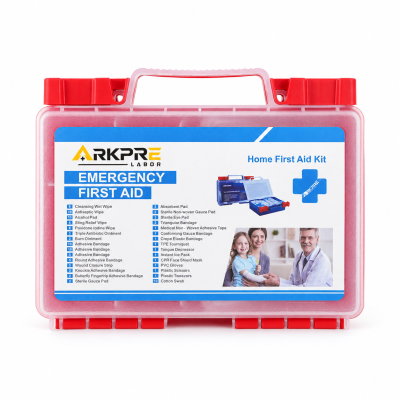
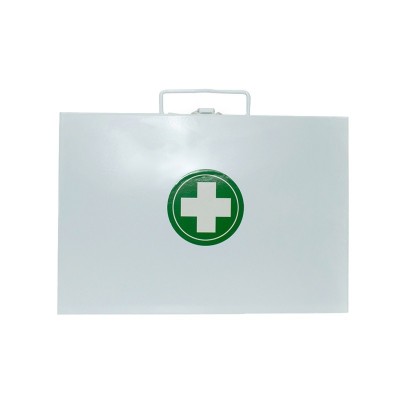
Private label first aid kits offer a way to build that range through an established manufacturing partner. Starting with an existing carrier and component assortment can reduce development work, while your brand controls positioning, presentation and the customer experience.
Quick answer: You can launch private label first aid kits through a contract supplier by selecting an established configuration, approving your branding and packaging, and completing the target market's product and labeling requirements. Confirm the responsible legal entities before placing the production order.
This guide focuses on US and EU purchasing considerations. The 90-day schedule below is an illustrative project plan for an established configuration with available documentation and suitable freight arrangements.
Private Label First Aid Kits: The 90-Day Launch Path
Begin with one target market, one intended use and a manageable number of SKUs. A family kit, a workplace kit and a trauma kit each require their own product brief. Adding several countries or specialist components increases the work needed before production.
| Timing | Project stage | Deliverable required to proceed |
|---|---|---|
| Days 1-10 | Define market, customer and budget | Product brief, intended-use statement, target sales price and quantity forecast |
| Days 11-20 | Select supplier and review the regulatory route | Preliminary contents list, supplier assessment and assigned regulatory responsibilities |
| Days 21-30 | Review samples and finish artwork | Approved sample, final bill of materials, reviewed labels and packaging files |
| Days 31-65 | Produce the approved configuration | Production against the agreed specification, with component and lot records |
| Days 66-75 | Inspect and release the shipment | Inspection results, shipping documents and resolution of release-blocking defects |
| Days 76-90 | Transport, clear customs and receive stock | Delivery, receiving inspection and sales-channel readiness |
The final 15 days require a transport route that can meet that window. For longer ocean freight or new regulatory work, extend the launch date. New tooling, testing, repeated sample revisions and component shortages also change the schedule.
Approve a milestone only when its deliverables are complete. A dated artwork approval should identify the precise file revision. A sample approval should link to the contents list used for that sample.
For the first brief, specify the following:
- Target country, sales channel and intended users.
- Kit application, carrier dimensions and expected storage conditions.
- Contents, individual specifications and quantity units.
- Required standard and edition where a standard claim is planned.
- Branding, language versions and retail packaging.
- Minimum remaining shelf life at delivery.
- Launch quantity, delivery location and replenishment forecast.
First Aid Kit Private Label Requirements: Labels, Certificates and Claims
First aid kit private label projects need a clear division of responsibilities. Before artwork approval, identify the legal manufacturer, any kit or procedure-pack assembler, importer, distributor and applicable local representative.
In the United States, FDA registration and listing obligations depend on the activities an establishment performs. Its guidance distinguishes manufacturers, specification developers, relabelers, importers and wholesale distributors. Map your actual activities to those roles before deciding which registrations are needed.
For EU medical devices, selling a device under your own name or trademark can bring manufacturer obligations under MDR Article 16. The provision includes an exception where a distributor or importer has an agreement with the manufacturer, the manufacturer is identified on the label, and that manufacturer remains responsible for the relevant requirements. Record the arrangement in the agreement and artwork.
Build the Label Review Around the Actual Product
Use the checklist below to prepare artwork for regulatory review. The applicable fields and their placement depend on the product, market and regulatory role.
| Information to review | Practical approval check |
|---|---|
| Product identity | Model, product name and contents match the approved specification |
| Responsible businesses | Names, addresses and role descriptions match the agreed regulatory arrangement |
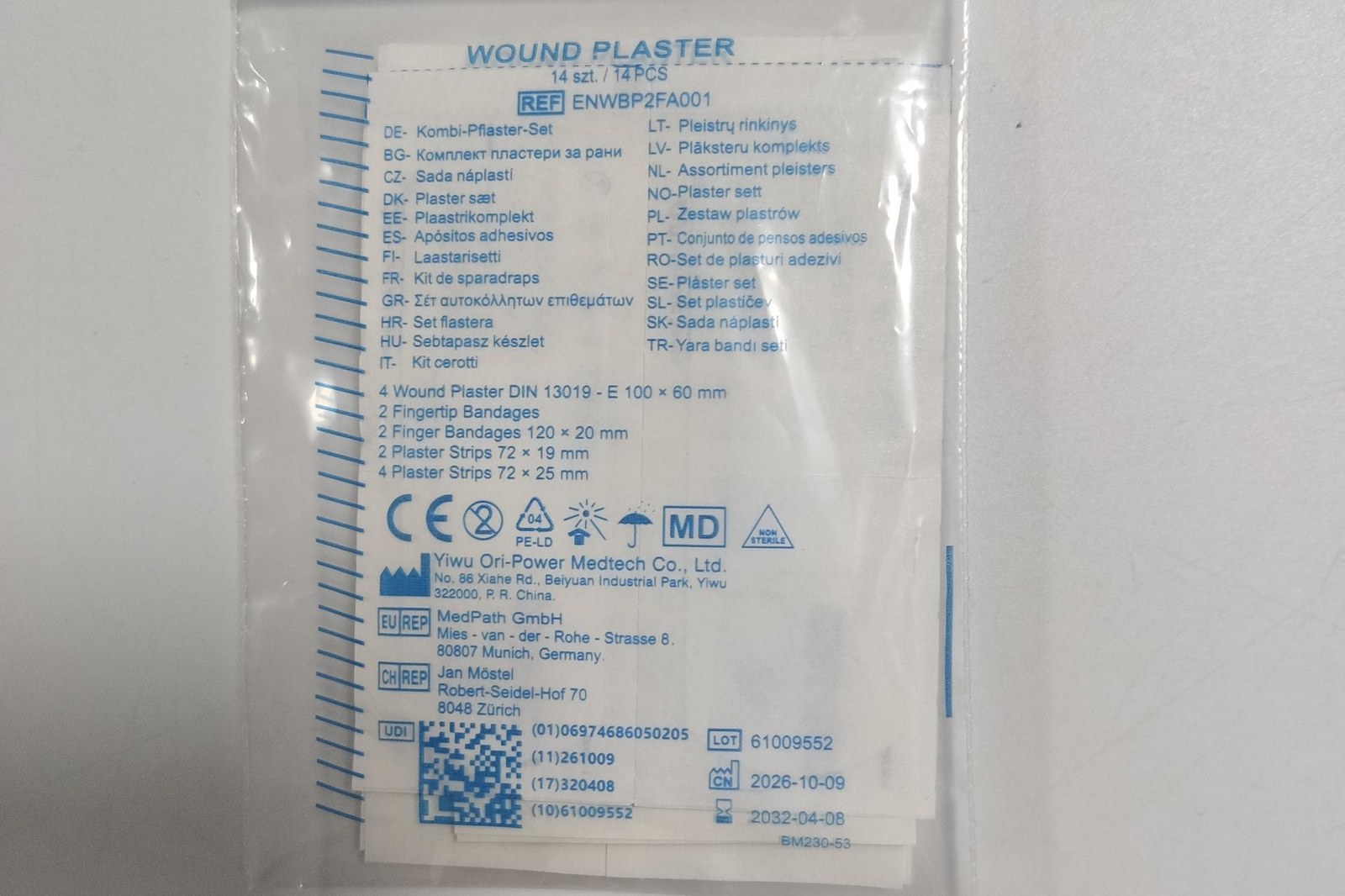
| Contents and quantity | Piece counts distinguish individual items, pairs, packs and rolls |
| Intended use and instructions | Claims and directions match the supplied products and intended users |
| Traceability | Applicable lot, serial and identifier fields remain legible and linked to records |
| Expiry and storage | Dates and conditions reflect the products and finished-pack labeling requirements |
| Symbols and markings | Each sterile, single-use or conformity marking has an appropriate basis |
| Languages and retail codes | Required market languages and sales-channel codes are reviewed together |
For US devices, FDA's general labeling guidance requires the appropriate business name and address. Where the named business is a distributor or other party, wording such as "Distributed by" or "Manufactured for" should accurately identify that relationship. Required information must remain readable within the artwork.
For an EU kit that qualifies as a system or procedure pack under Article 22, confirm the applicable assembly route and statement. Article 22(1) packs follow specific marking provisions, including the pack producer's identity and the prohibition on an additional CE mark on the pack itself. Other configurations may require conformity assessment as a device in their own right.
Check What Each Document Supports
Ask the supplier to link every document to the proposed model, relevant components and responsible company.
| Document or evidence | What to verify |
|---|---|
| ISO 13485 certificate, when claimed | Certified legal entity, site, scope, validity and issuing body |
| EU declaration of conformity for relevant devices | Product identification, manufacturer and applicable legislation |
| Notified-body certificate, where required | Covered device scope, status and relevance to the supplied products |
| Article 22 statement, where applicable | Identified pack producer and the configuration it supports |
| FDA registration/listing and premarket status, as applicable | Actual establishment, device and activity covered |
| Test reports and inspection specifications | Tested model, materials, dimensions and claimed performance |
| Quality agreement | Change approval, complaints, traceability and recall cooperation |
Keep claims specific. A standard-conformity statement should identify the standard and edition and be supported by the finished configuration. A "sterile" claim must accurately describe the product or components to which it applies.
FDA registration and device listing do not establish approval or clearance. FDA also states that it does not issue registration certificates to medical-device facilities. Review phrases such as "FDA certified" before they reach a retail box or product page.
For EU device private-label arrangements, assign UDI responsibility during setup. MDCG 2026-5 explains that where the identified manufacturer retains its role, UDI assignment remains linked to that manufacturer, including when a distributor markets the device under another trade name. Practical work may be delegated while legal responsibility remains with the manufacturer.
Private Label First Aid Kit Manufacturer vs Trading Company
A private label first aid kit manufacturer may provide direct access to assembly, carrier production and change control. A trading company may coordinate several factories and consolidate a broader assortment.
Evaluate either partner through the same evidence. Commercial descriptions alone cannot establish the entity's regulatory role.
| Area | Manufacturing partner | Trading partner |
|---|---|---|
| Production visibility | Ask to verify the site and processes performed there | Ask for the actual manufacturing sites and their responsibilities |
| Specification changes | Confirm who authorizes changes on the production line | Confirm how approvals reach each factory |
| Documentation | Match records to the manufacturing entity and SKU | Check continuity between trader, factory and product documents |
| Claims and complaints | Define technical investigation and response responsibilities | Define the escalation route and access to factory records |
| Repeat-order consistency | Review retained samples and revision control | Require the same revision control across all subcontracted sources |
Ask both partners who will investigate a damaged sterile wrapper, approve a component substitution and identify customers who received a specific lot. Put the answers in the quality agreement.
Private Label First Aid Kits Wholesale: MOQ and Packaging Options
When comparing private label first aid kits wholesale quotations, ask for separate minimums for the finished kit, carrier, printed packaging and customized component labels.
| Packaging choice | Purchasing consideration |
|---|---|
| Existing pouch with printed logo | Confirm print setup, available colors and MOQ per design |
| Existing case with a branded sleeve | Check sleeve print quantity, fit and durability |
| Custom retail carton and instruction leaflet | Confirm artwork revisions and MOQ by language version |
| Fully customized component labels | Review labeling responsibility, print quantities and product identification |
| New carrier dimensions or molded case | Include development, tooling, sampling and validation in the budget |
ORI-POWER supports private label first aid kit launches with a published MOQ from 500 sets and samples in 7-15 days, plus a higher threshold for fully customized labels. Because component, printing and packaging choices affect the final terms, request a model-specific quotation to confirm the exact scope for your program.
Build the first order around forecast demand and acceptable inventory exposure. For illustration, demand of 120 kits per month makes a 500-kit order approximately 4.2 months of stock before allowing for samples, returns or safety stock.
Compare landed cost using the product price, setup and artwork costs, testing where needed, inspection, freight, duties and warehouse handling. Include expected promotional spending when assessing launch profitability.
Compare the Three Sourcing Models
Suppliers use "private label," "white label" and "OEM" differently. The comparison below uses private label for an adapted supplier platform, catalog branding for minimal changes to a stock configuration, and in-house production for operating your own line.
| Model | Initial investment | Time considerations | Control and operating burden |
|---|---|---|---|
| Private label using an established platform | Samples, artwork, packaging and initial inventory | Depends on customization, review and production availability | Control over agreed configuration and branding, supported by supplier production |
| Catalog kit with minimal branding | Primarily inventory and branding setup | Can be shorter when suitable stock and documentation are available | Greater reliance on the supplier's existing specification |
| Your own production line | Facilities, equipment, personnel and quality systems | Requires facility and process setup alongside product readiness | Direct control with responsibility for running and maintaining production |
Custom Private Label First Aid Kit: From Reference Sample to Repeat Order
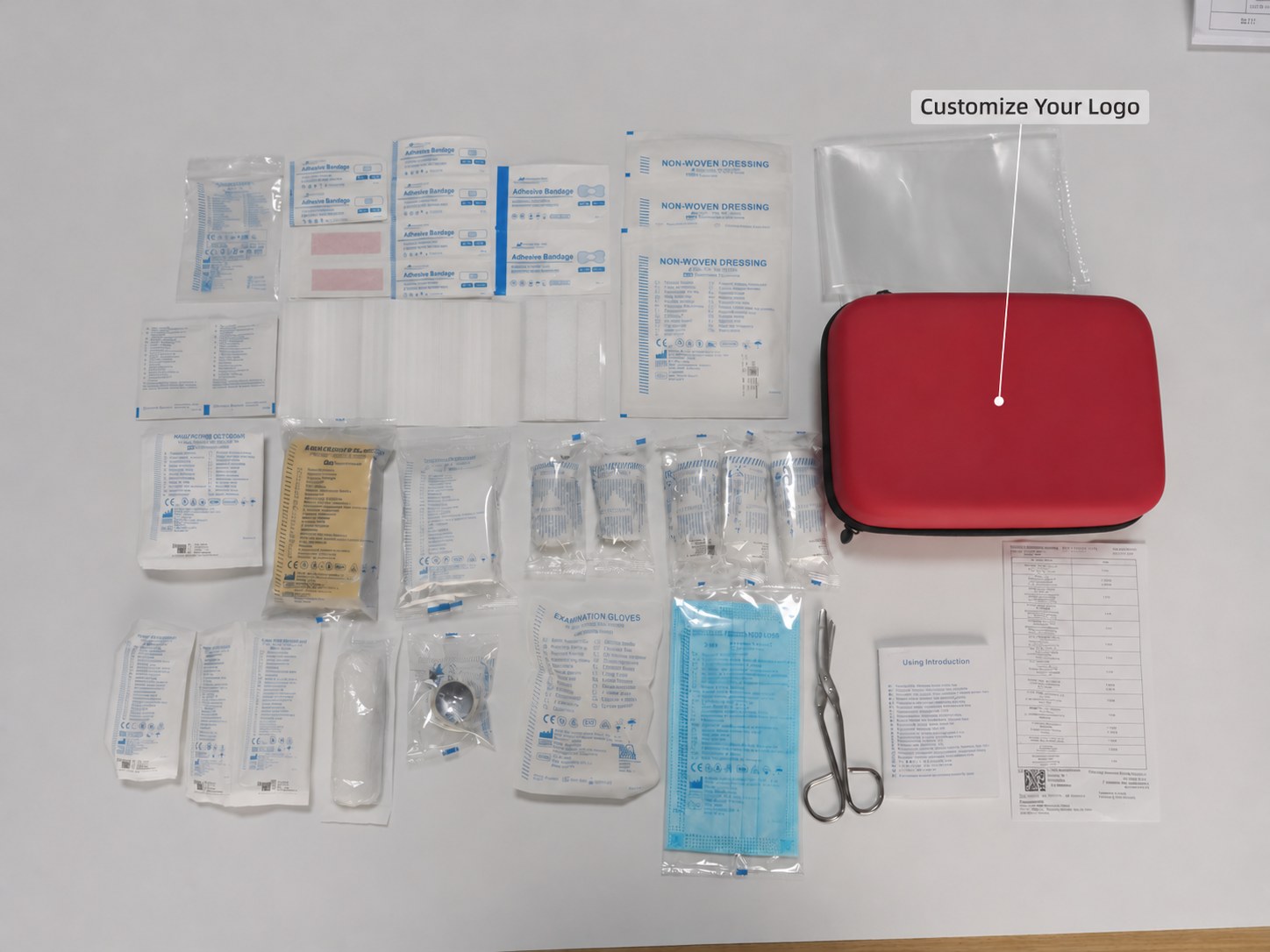
Turn the reference sample into a written production specification. If the reference comes from another brand, describe the functions, dimensions and layout you need, and establish permission for any protected design or artwork you intend to use.
A practical approval sequence is:
- Translate the reference into a bill of materials. Record each component's dimensions, material, intended use, sterile status, quantity and approved source or model.
- Check the carrier with the full contents inside. Inspect access, compartment fit, zipper operation and pressure on component packaging.
- Approve the complete retail sample. Include the pouch, inserts, labels, barcode, outer carton and final artwork revision.
- Define inspection and acceptance criteria. Agree how the supplier and buyer will check quantities, component identity, packaging seals, print readability and carton configuration.
- Link the order to the approved revision. State that substitutions require written approval and an assessment of affected claims and documents.
- Retain release and traceability records. Keep lot details, component expiry information, inspection results and the final packing list.
- Review the first batch before reordering. Use receiving findings, customer feedback and actual sales to adjust the next order.
For a repeat order, request confirmation of the bill-of-materials revision, component sources, artwork, remaining shelf life and any proposed change. A familiar SKU still needs change control.
ORI-POWER's published capabilities include kit assembly, selected medical consumables, textile carriers and plastic cases. These capabilities can support a custom private label first aid kit project, with the actual scope confirmed against the requested model.
Frequently Asked Questions
Do I need to register my brand before ordering private label first aid kits?
Trademark clearance should come before packaging investment. In the US, federal trademark registration is optional, and rights can arise from use. Registration provides additional protections. Check the destination market and any marketplace brand-program requirements before committing to artwork.
Can I use the factory's certificates for my own brand?
Factory documents can support the project when their scope covers the relevant company, products and activities. Confirm how your branded model is identified and which obligations your business assumes. Ask for the model-specific documentation package and agreed labeling arrangement before production.
How many kits should I buy for the first batch?
Use expected sales, MOQ, delivery lead time and remaining shelf life to calculate the opening order. Request several quantity tiers and separate minimums for each branding or packaging option.
Can I launch within 90 days?
A 90-day target can be planned for an established configuration when sampling, documentation, artwork, production and transport fit the schedule. Confirm those dependencies with the supplier before making a public launch commitment.
Can I change the contents after the first order?
Changes should go through the approval process. Review the bill of materials, intended use, claims, labels, documentation and identifiers affected by the change before releasing the next batch.
Plan Your Private Label Launch with ORI-POWER
Send ORI-POWER your target market, intended users, reference specification, estimated quantity, packaging preferences and required delivery date. Request a project-specific launch timetable showing sample approval, documentation review, artwork approval, production, inspection and transport.
Explore Private Label First Aid Kits for branding options, or review OEM/ODM First Aid Kits for carrier and contents customization.
Request a project-specific launch timetable and quotation for your private label program.
Send an InquiryReferences
- FDA — Who Must Register, List and Pay the Fee
- European Commission — MDCG 2018-6, Article 16 obligations
- FDA — General Device Labeling Requirements
- EUR-Lex — Regulation (EU) 2017/745, Article 22
- FDA — Important Reminders about Registration and Listing
- European Commission — MDCG 2026-5, UDI assignment
- ORI-POWER — OEM/ODM First Aid Kits
- ORI-POWER — Manufacturing and product capabilities
- USPTO — Basic Facts About Trademarks