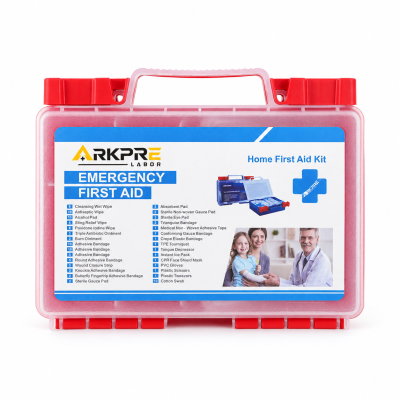
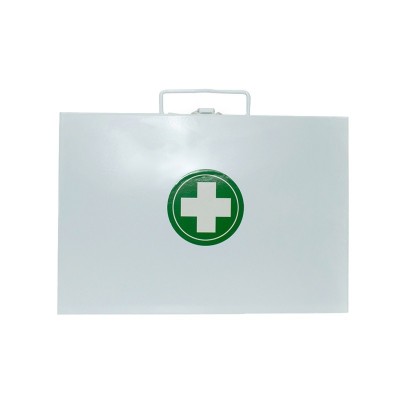
First Aid Kit Refills Wholesale: How Distributors Build a Refill Program
A customer's first aid cabinet may remain in service while its dressings, gloves and wipes need repeated replacement. For distributors, those replacement orders create an opportunity to keep supporting the customer after the original kit sale.
Quick answer: A reliable first aid kit refills wholesale program connects each kit to an approved bill of materials, tracks component quantities and expiry dates, and defines clear purchasing units. Scheduled reviews and usage-triggered reorders then help customers replenish the right supplies.
What a First Aid Kit Refills Wholesale Program Covers
Start with the kit model and its approved contents list. Record the applicable market, standard edition or customer specification, then assign a replacement SKU to each component.
For example, "sterile gauze" is too broad for a purchase order. A usable entry identifies dimensions, material, sterile status, pieces per sealed pack and sealed packs per sales unit. This helps prevent substitutions that change the original configuration.
Build the program around five records:
- A version-controlled kit bill of materials, including quantities and approved alternatives.
- A component master with specifications, sales units and carton conversions.
- A lot ledger showing receipt dates, expiry dates, available quantities and storage locations.
- A customer-to-kit register linking each account to the model and revision it uses.
- A reorder schedule combining actual consumption, inspections and upcoming expiries.
For US workplaces, OSHA requires adequate first aid supplies to be readily available. Its nonmandatory guidance recommends periodically assessing workplace needs and adjusting supplies. A distributor's refill list should therefore support the customer's site assessment and chosen kit specification.
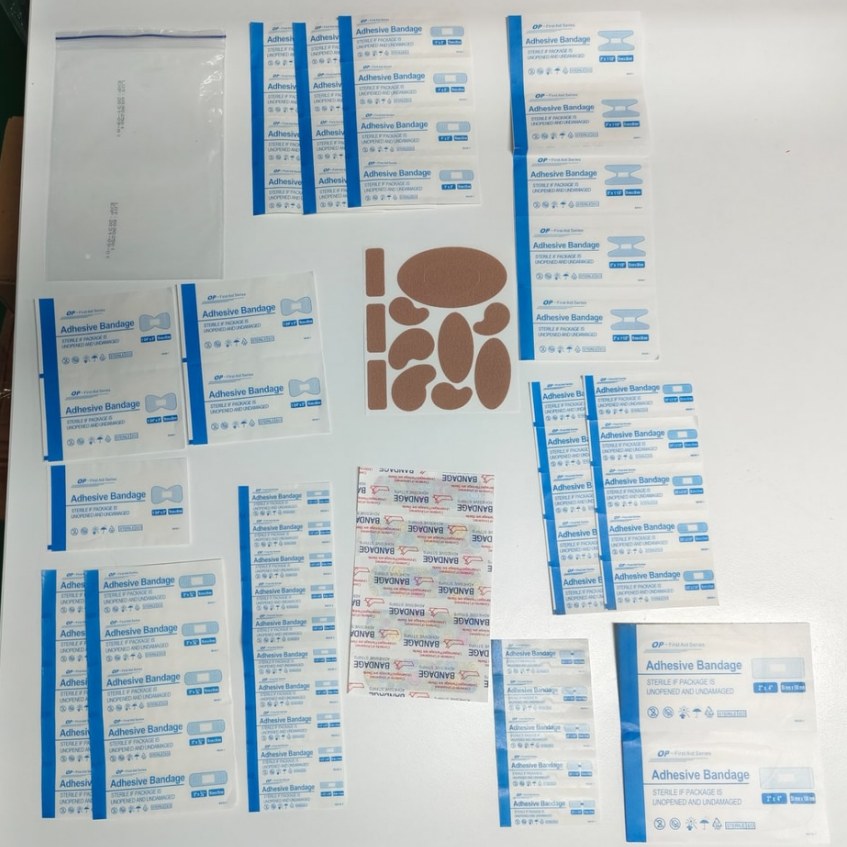
Do First Aid Kits Expire? Expiry Rules, Symbols and Replacement Cycles
Yes — many first aid kit components have expiry dates. Assess the kit's outer labeling together with the individual items. A serviceable container may hold supplies that need replacement, and a damaged wrapper can require action before its printed expiry.
Use the following as an inventory policy. Follow each manufacturer's labeling and storage instructions when making a product-specific decision. Drug expiry dates are supported by stability data under the stated storage conditions.
| Component | What controls replacement | Refill action |
|---|---|---|
| Sterile gauze and dressings | Labeled use-by date and sterile-barrier integrity | Replace at expiry or when opened, wet, punctured or otherwise compromised |
| Antiseptic pads and wipes | Product expiry, intended use and sachet condition | Replace expired, leaking or dried-out units |
| Medical gloves | Manufacturer's shelf-life information, storage conditions and condition | Track any labeled expiry and replace damaged or degraded gloves |
| Adhesive dressings and tape | Manufacturer's dating, packaging and adhesive condition | Replace expired stock and products that no longer perform as specified |
| Medicines, where included | Labeled expiry and applicable local supply rules | Replace expired products and verify market authorization and labeling |
| Emergency blankets and nonsterile bandages | Manufacturer's instructions and product condition | Replace torn, contaminated or deteriorated items |
| Scissors and reusable cases | Function, cleanliness and manufacturer's maintenance instructions | Inspect cutting action, corrosion, hinges, closures and contamination |
The table is a practical inspection framework. Actual shelf lives vary by product. FDA guidance also emphasizes inspecting medical gloves for damage and replacing torn gloves.
At assembly, record the earliest component expiry as a planning field. If the finished kit carries an expiry date, establish its labeling basis through the applicable product requirements and quality procedures. Replacing one component should trigger a review of the remaining contents and the kit record.
First Aid Kit Expiry Date Symbol: Reading Dates on Sterile Packs
The first aid kit expiry date symbol commonly seen on medical-device packaging is an hourglass beside the use-by date. The batch code identifies the production lot, and the catalog reference identifies the product. Store those values in separate fields.
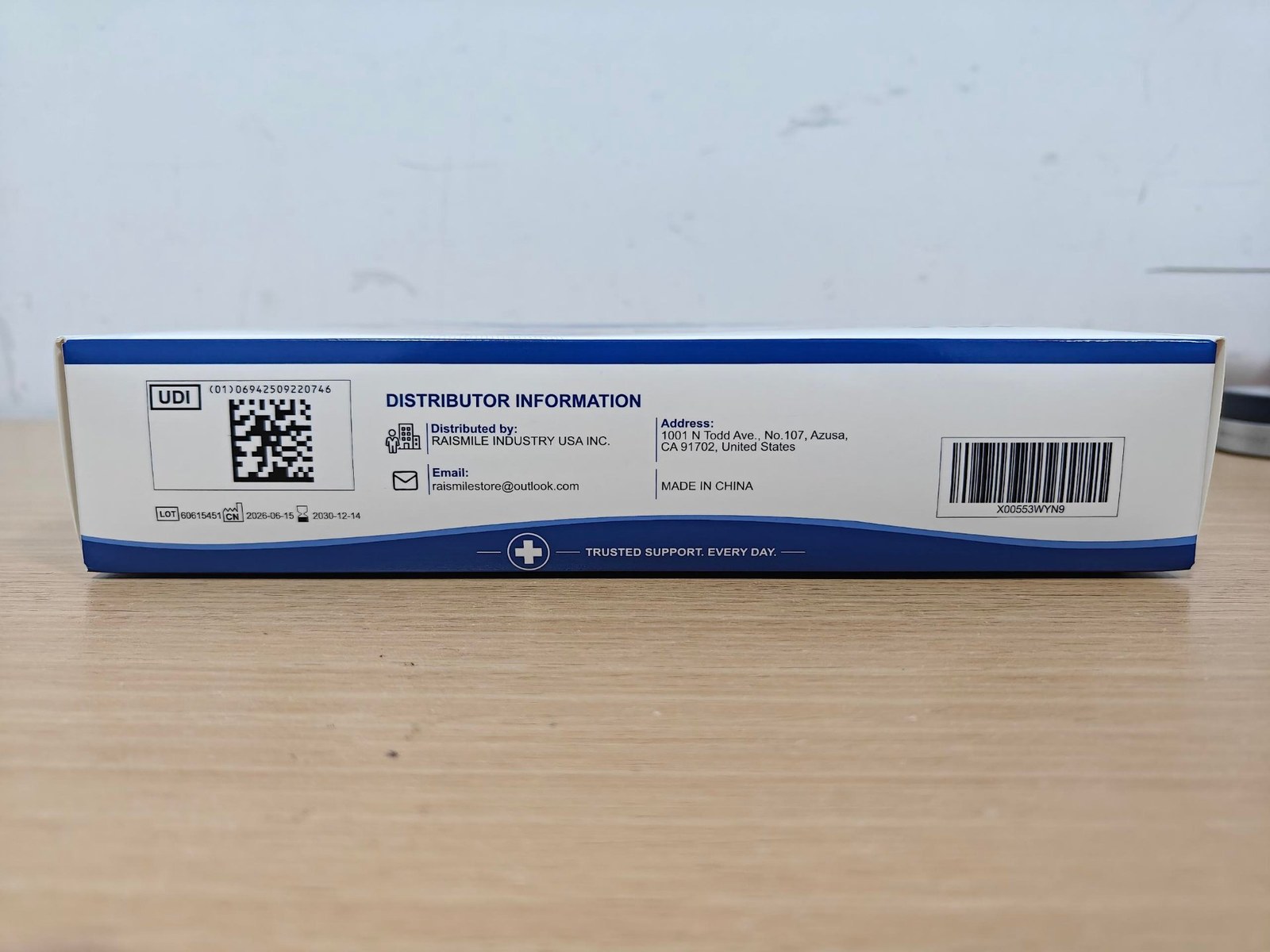
| Label element | Illustrative value | Meaning |
|---|---|---|
| Hourglass / use-by | 2029-06-30 | Date associated with the use-by instruction |
| LOT | GZ260615A | Manufacturing batch identifier |
| REF | GZ-1010-2 | Product catalog reference |
| EXP | 2029-06 | Expiry shown to month precision; confirm the supplier's date convention |
| Date of manufacture / MFG | 2026-06-15 | Production date |
These values are fictional examples. Preserve the date precision supplied by the manufacturer. Where the warehouse system needs a full date for a month-only expiry, document the agreed interpretation.
Management Expiry Date and Managing Stock Expiry Dates in a Warehouse
For searches such as "management expiry date," the operational task is straightforward — capture the date at receipt and use it to control allocation.
Apply first-expiry, first-out (FEFO) to dated stock. A later delivery can expire sooner than stock already on the shelf. WHO's warehouse guidance distinguishes FEFO for dated supplies from FIFO for items without expiry dates.
| Method | How it works | Suitable use and limitation |
|---|---|---|
| FIFO | Picks the earliest receipt first | Useful for undated items; receipt order alone does not control expiry |
| Manual FEFO | Uses lot labels, shelf positions and a shared spreadsheet | Practical for smaller ranges when receipt and dispatch updates are consistent |
| ERP/WMS FEFO | Allocates by lot expiry with customer shelf-life filters | Supports larger operations; accuracy depends on capture at receipt and pick confirmation |
Make the lot record the source for alerts. For an illustrative imported refill range, review stock at 180 days remaining, decide transfer or return options at 90 days, and block shipments that fail the customer's agreed remaining shelf life. Set the actual thresholds around transport time, customer consumption and product instructions.
For example, if a customer requires 12 months remaining at delivery and transit takes two months, stock with 13 months remaining at dispatch cannot satisfy that term.
Agree return rules before ordering. Define responsibility for short-dated deliveries, authorization deadlines and the evidence needed for any resale decision. Returned medical supplies should enter a controlled hold process while packaging, traceability and storage history are assessed. WHO distribution guidance addresses risks across storage, transport, repackaging and relabeling.
First Aid Kit Replacement Items: Building a Restock List by Kit Type
Create a separate refill specification for each application. The examples below are planning modules. Approve final contents and quantities against the kit's intended use, market requirements and customer specification.
| Kit type | Example first aid kit replacement items | Check before approving the refill |
|---|---|---|
| Workplace / Work | Adhesive dressings, sterile gauze, wound dressings, tape, gloves and specified wipes | Preserve required sizes and quantities and accommodate the site's identified needs |
| Vehicle | Dressing packs, compresses, gloves, tape and other items on the vehicle-kit list | Match the destination market and the exact specification or standard edition |
| Baby and family | Suitable dressings, gauze, tape and caregiver gloves | Review age suitability and intended use; select medicines only through a separate product review |
| IFAK | Specified gauze, pressure dressings, gloves and approved trauma components | Match exact device models, user training and the customer's clinical specification |
A component may serve several kit types when its specification matches each approved bill of materials. Use one internal component SKU and link it to all compatible kit models. Keep customer item numbers as searchable cross-references.
For partial replenishment, calculate the gap item by item:
Replacement quantity = approved target quantity - usable quantity remaining
Count only stock that passes the program's date, condition and specification checks. If a kit requires ten units and seven remain usable, the replacement need is three. A five-unit sales pack can serve that need if the customer's spare-stock handling is clearly defined.

Refill Program Economics: Fill Rate, MOQ and Carton Sizes
A refill program earns repeat business when the customer can order accurately and the distributor can fulfill it economically. Compare gross margin alongside labor, packaging, freight and expiry losses.
| Supply model | Margin considerations | Operating costs | Best-fit situation |
|---|---|---|---|
| Complete-kit replacement | Higher order value, with a new container included | Storage and freight for a complete unit | Damaged container, configuration change or a full replacement contract |
| Kit-specific refill pack | Pricing can reflect convenient matched contents | Assembly, pack inventory and component synchronization | Repeated restocking of the same kit model |
| Individual component SKUs | Flexible pricing and limited unwanted items | More order lines, picks and small-pack handling | Partial replenishment and uneven consumption |
There is no fixed margin advantage across all three models. Use your own landed costs and sales prices.
For an illustrative refill pack sold at $12 with an $8 landed product cost, gross profit is $4, or 33.3% of revenue. If fulfillment adds $1.20 and expected expiry losses add $0.30, contribution before overhead is $2.50. These figures demonstrate the calculation only.
Define the units before comparing quotations. One example might use one sealed dressing as the base unit, ten dressings per sales box, and twenty boxes per carton. The quotation and warehouse system should show all three.
Negotiate MOQ separately for stock items, custom printed packaging and assembled refill packs. If one carton contains 200 units and demand is 50 per month, it represents four months of stock. Test that purchase against the remaining shelf life, reorder lead time and customer acceptance terms.
Track three measures monthly:
- Unit fill rate — eligible units supplied on the initial shipment divided by units ordered.
- Complete-order fill rate — orders supplied in full on the initial shipment divided by total orders.
- Expiry write-off rate — expired inventory value divided by a consistently defined inventory or sales-cost base.
For preassembled refills, one missing component can hold up every pack. If each pack needs two glove pairs and only 80 eligible pairs are available, gloves limit assembly to 40 packs. Build the production plan around that constraint before promising dispatch.
Frequently Asked Questions
Can an expired first aid kit still be used?
Inspect the individual components and follow the finished kit's labeling. Replace expired medical supplies and medicines for planned emergency readiness. A container or reusable tool can remain in service if it satisfies the manufacturer's instructions and condition checks. FDA advises against using expired medicines.
Can different replacement items be packed together?
A mixed refill pack can contain different items when their packaging, storage requirements and intended configuration are compatible. Preserve individual sterile barriers, required product information and lot traceability. Have the responsible supplier review the regulatory obligations associated with assembling, repackaging or relabeling the finished pack for its market.
How should MOQ and carton sizes be set?
Compare expected demand, packaging runs, assembly costs, freight and remaining shelf life. Ask for separate prices for stock cartons, custom packaging and assembled refills, then choose a purchasing unit your customers can consume within the accepted period.
How often should customers inspect kits?
Set an interval based on usage, exposure, local requirements and the site assessment. Review after use and act on upcoming expiry alerts. A monthly review can be an initial service arrangement, with more frequent checks where consumption warrants it. OSHA's general guidance calls for periodic assessment without setting one inspection frequency for every workplace.
What should a distributor send ORI POWER for a refill quotation?
Provide kit models, current contents lists, target countries, estimated demand, sales-pack sizes, branding requirements and minimum remaining shelf life at delivery. Ask for quoted MOQ, carton quantities, lead time, approved substitutions and lot/expiry reporting.
Build a Refill Program with ORI POWER
ORI POWER's range includes workplace refills and replacement consumables, while its distributor program describes long-term refill support. Use the existing kit specification to begin a model-specific discussion.
Explore First Aid Kit Refills & Accessories, review the Distributor Program, or discuss procurement through Supply Chain.
Contact amychen@ori-power.com to request a model-specific refill quotation.
Send an InquirySources
- OSHA — 29 CFR 1910.151
- OSHA — First aid kits, nonmandatory Appendix A
- FDA — Expiration Dates, Questions and Answers
- FDA — Medical Gloves
- Boston Scientific — Medical-device Symbols Glossary
- WHO — Warehouse and Stock Management
- WHO — Good storage and distribution practices for medical products
- ORI POWER — First Aid Kit Refills & Accessories
- ORI POWER — Distributor Program