Factory First Aid Kit Guide: How Many Kits, What Contents and Where to Mount Them
A new factory is almost ready to open. Machinery is installed, production teams are assigned, and purchasing is finalizing safety supplies. Then a seemingly simple question delays the order: how many first aid kits does the plant actually need?
Buying one large cabinet for every 100 employees sounds convenient. It can also leave a maintenance room, loading dock, or separate production building without practical access to supplies.
Quick answer: Plan a factory first aid kit system around hazards, accessible coverage areas, and the maximum number of people working at the same time. There is no universal federal OSHA rule requiring one fixed station per 100 workers or one new mobile kit per shift. Use a site assessment to decide station locations, contents, and mobile response coverage.
This guide uses U.S. federal OSHA requirements and ANSI/ISEA guidance as its regulatory reference. Buyers in other markets must apply local requirements; U.S. employers should also check applicable State Plan rules. OSHA-approved State Plans may have different or more stringent provisions.
Factory First Aid Kit Planning: How Many Kits per 100 Workers
For a 100-worker factory, the first question should be "where do those employees work?" A single open assembly area and four separated production zones present different access problems.
Federal OSHA requires adequate first aid supplies to be readily available. Trained first aid personnel are required where the near-proximity condition in 29 CFR 1910.151(b) applies. The employer must plan the response arrangement as well as the equipment.
Start your purchasing brief with five inputs:
- Peak occupancy: Include shift overlap and people such as contractors or visitors where relevant to the site plan.
- Work-area separation: Mark buildings, floors, restricted rooms, and isolated operations.
- Hazards: Identify machinery, hot processes, chemicals, electrical work, and material handling.
- Actual access: Walk the route to proposed stations under normal operating conditions.
- Replenishment demand: Estimate use between inspections and restocking.
OSHA's nonmandatory Appendix A recommends considering additional supplies and kits for larger or multiple operations, and using injury information to identify specific needs.
A practical kit-count worksheet
Use the following as a purchasing worksheet, not a regulatory formula:
Planned kit inventory = approved fixed stations + concurrently needed mobile kits + justified spare kits
The site assessment determines each term. Count physical kits once: a removable case that serves as a fixed station cannot simultaneously provide coverage at its mounting point and elsewhere.
For example, an EHS team might approve four fixed stations for four separated zones and one portable kit for a roving response team. That produces a five-kit purchasing list. Whether it is adequate depends on the actual layout and risk assessment.
| Illustrative workforce | Assumed layout and response arrangement | Fixed stations | Mobile kits | Initial kit inventory |
|---|---|---|---|---|
| 10 workers, one shift | One compact, lower-risk work area; no separate mobile task | 1 | 0 | 1 |
| 25 workers, one shift | Two separated areas needing independent access | 2 | 0 | 2 |
| 50 workers, two shifts of 25 | Three active areas; one roving response assignment | 3 | 1 | 4 |
| 100 workers, one shift | Four active zones; one roving response assignment | 4 | 1 | 5 |
| 300 workers, three shifts of 100 | Same four zones used successively; mobile kit handed over | 4 | 1 | 5 |
These are hypothetical planning examples, not minimum compliant quantities. No spare units are included. Additional hazards, simultaneous mobile assignments, inaccessible routes, or supply shortages can change every figure.
The final row explains why three shifts do not automatically require three times as many cabinets. The physical stations may remain in service across shifts; stock consumption, access, and responder availability still need to be managed.
How 10-, 25-, and 50-person kits fit the plan
Headcount descriptions are useful catalog categories. They do not establish a universal legal coverage limit or determine ANSI Class A or Class B.
| Catalog description | Purchasing starting point | What to verify before selection |
|---|---|---|
| 10-person kit | Compact option for a small work area | Actual contents, foreseeable injuries, refill capacity |
| 25-person kit | Department or workshop option | Supply quantities, mounting arrangement, accessibility |
| 50-person kit | Larger team or higher-consumption area | Hazard coverage, storage capacity, replacement availability |
ORI POWER offers workplace kit groupings by team size, including these categories. Select the specification first, then the carrier and quantity; do not assume that two "25-person" packs necessarily replace one correctly specified "50-person" station.
First Aid Kit for Factory Floors: Contents by Hazard Zone
A first aid kit for factory use should have a documented baseline contents list, with additions where the site assessment identifies a need.
ANSI/ISEA Z308.1 distinguishes Class A supplies for common workplace injuries from the broader assortment and quantities associated with Class B for more complex or higher-risk environments. Class B includes a splint and tourniquet. The class is a contents classification — not a workforce-size label.
For a new specification prepared in late 2026, identify the exact standard edition. ISEA has published ANSI/ISEA Z308.1-2026, including updated guidance and requirements addressing subjects such as bilingual first aid guides and arterial tourniquets. Do not assume that a kit previously labeled to the 2021 edition automatically meets the new edition.
The table below provides planning prompts rather than a complete minimum-fill list or treatment instructions. Confirm exact items, quantities, sizes, performance, and labeling against the selected standard and the site's response program.
| Hazard zone | Supplies to review with the site's first aid lead | Separate planning issue |
|---|---|---|
| Machining and fabrication | Sterile pads, trauma dressings, bandages, examination gloves, and appropriate bleeding-control supplies | Safe access around equipment; trained response for serious injuries |
| Chemical handling and sanitation | General wound-care supplies and appropriately labeled eye/skin wash where suitable | Chemical-specific assessment, safety data sheets, and emergency flushing facilities |
| High-temperature processes | Suitable burn dressings, sterile dressings, gloves, and thermal protection | Storage away from heat; response appropriate to the process |
| Electrical maintenance | General trauma and burn-care supplies, breathing barrier, and thermal protection | Electrical isolation and trained emergency response; assess AED provision separately |
| Warehousing and dispatch | Wound dressings, bandages, cold packs, gloves, and appropriate support supplies | Mobile coverage for docks or yards; access around vehicle traffic |
These recommendations apply OSHA's principle of matching the first aid program to the worksite. OSHA's training guidance specifically distinguishes thermal, chemical, and electrical burns and addresses wounds and infection precautions.
Chemical zones need special attention. Where injurious corrosive materials can contact eyes or the body, 1910.151(c) requires suitable immediate emergency drenching or flushing facilities. A small bottle inside a kit does not by itself meet that separate need.
For electrical areas, assess emergency response and AED arrangements with competent personnel. OSHA does not impose a universal AED-in-every-kit requirement under 1910.151. Other applicable requirements still need checking.
First Aid Kit for Manufacturing Plant: Fixed vs Mobile Stations
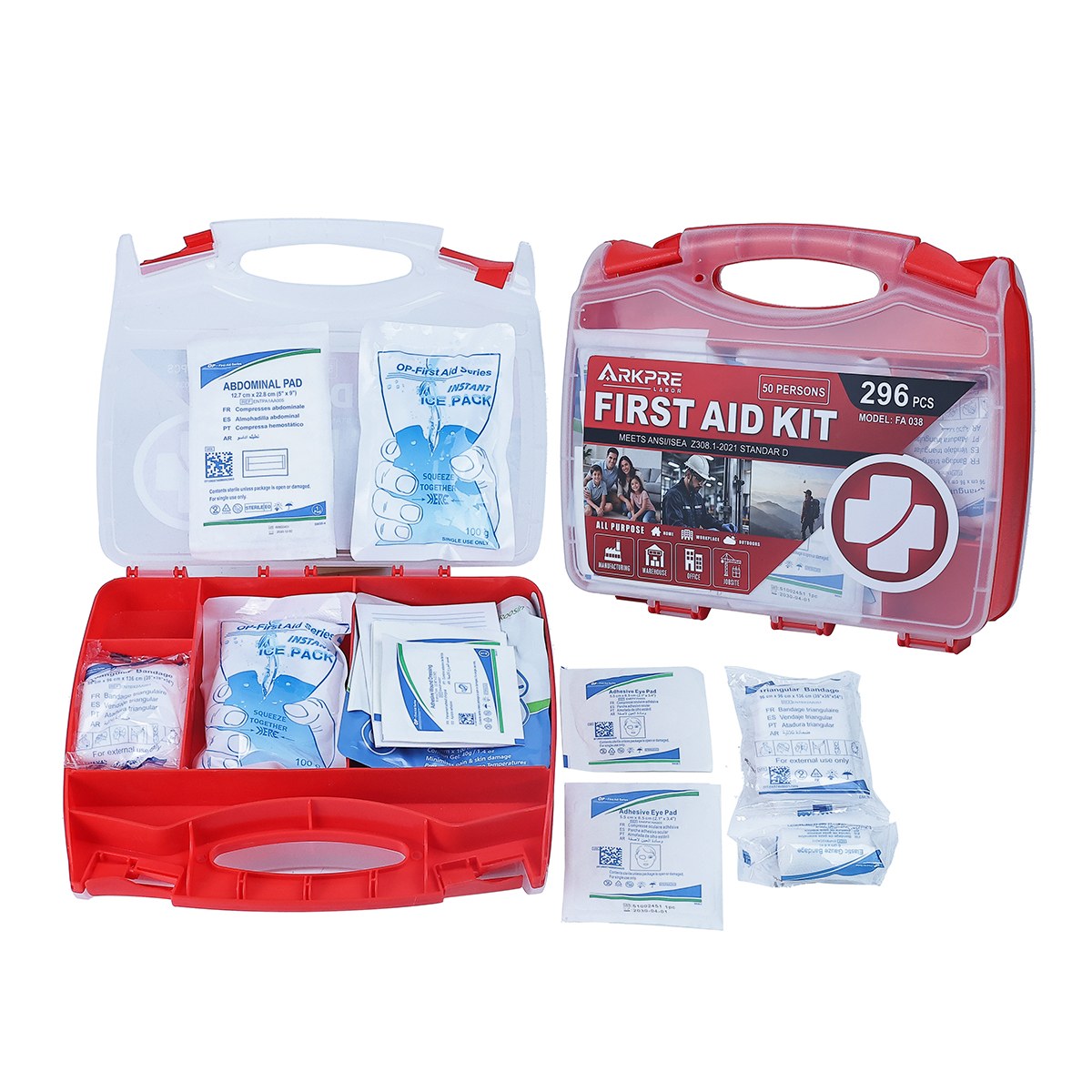
A well-planned first aid kit for manufacturing plant use may combine recognizable fixed locations with portable supplies.
| Selection factor | Fixed station | Mobile kit |
|---|---|---|
| Main purpose | Reliable access at an assigned location | Bring supplies to a response location |
| Typical format | Wall cabinet or mounted case | Carry case, bag, or portable box |
| Stock planning | Capacity for the assigned area | Contents suitable for the assigned response |
| Main operational risk | Obstructed access or empty compartments | Kit removed, misplaced, or not returned |
| Ownership | Named station owner and backup | Named custodian and handover procedure |
Portability does not automatically mean waterproofing. ANSI/ISEA container types distinguish stationary indoor, portable indoor, water-resistant indoor/outdoor, and more demanding mobile/outdoor applications. Select a container for the actual environment and verify evidence for any claimed protection.
For example, an indoor assembly-line kit may need protection from dust and handling. A kit carried to an exposed yard may also need resistance to rain and rough transport. A soft bag described as "industrial" does not establish a tested waterproof rating.
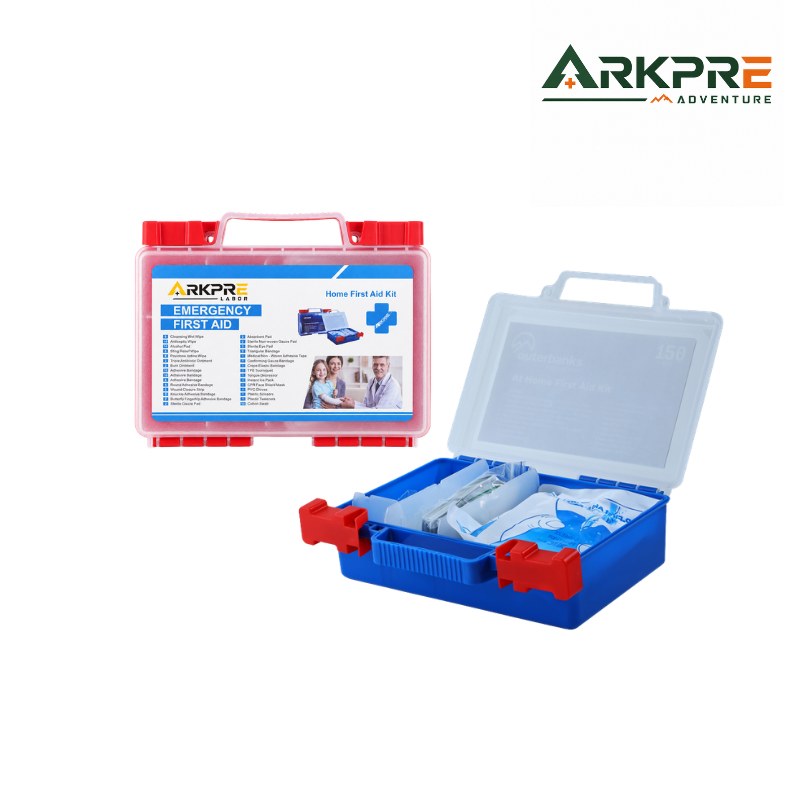
Where should factory first aid kits be mounted?
Choose locations that workers can identify and responders can reach without negotiating avoidable barriers. OSHA's interpretation cautions against locating supplies beyond multiple doorways, hallways, or stairways.
For the installation walkthrough, use this practical checklist:
- Select a visible position on the safe access side of the work area.
- Keep the cabinet clear of stored materials, swinging doors, and vehicle routes.
- Avoid locations where a likely incident could make the station inaccessible.
- Protect contents from heat, moisture, contamination, and damaging exposure.
- Use the mounting hardware and installation method appropriate to the case.
- Confirm that intended users can open the cabinet and remove supplies.
- Assign a station ID and show it on the site's emergency information.
- Check access during every shift, including when offices are closed.
These are installation recommendations, not a prescribed universal mounting height or spacing rule. Assess accessibility requirements and the case manufacturer's instructions before installation.
First Aid Kit for Manufacturing Lines: Shift Handover Rules
A first aid kit for manufacturing operations must remain available when the shift changes. Use a short handover checklist:
- Confirm each fixed station and assigned mobile kit is present.
- Report supplies used, damaged, or approaching expiry.
- Replenish shortages and identify any temporary coverage arrangement.
- Confirm who is responsible for the next shift's checks.
- Verify the site's responder coverage and emergency contact arrangements.
For mobile kits, record the kit ID, location, custodian, outstanding shortages, and handover time. If two teams need portable supplies simultaneously, one shared kit cannot serve both assignments.
This handover process is an operating recommendation. It should be integrated into the plant's existing safety procedures rather than described as a universally mandated OSHA form.
Inside a First Aid Kit Factory: How ORI-POWER Builds and Tests Kits
Choosing a first aid kit factory involves more than comparing the number of pieces in a sample. Buyers need to understand how the approved configuration becomes a repeatable production order.
ORI POWER's published manufacturing process covers specification development, incoming-material inspection, component and carrier production, packaging support, system assembly, and final verification. The company describes assembly checks for organized contents and final checks of configuration, labeling, function, and finish. Its workplace program also identifies sample approval and batch quality inspection. For the full picture, review ORI POWER's first aid kit manufacturing process and published lead times.
For buyers, those stages should translate into reviewable records. The following are documents and acceptance criteria to agree for your order, not a claim that every ORI POWER SKU undergoes an identical test protocol.
| Order stage | What the buyer should request |
|---|---|
| Configuration approval | Controlled bill of materials, quantities, sizes, target standard, and approved sample |
| Component acceptance | Relevant product specifications and applicable conformity evidence |
| Kit assembly | Agreed contents arrangement and verification against the approved list |
| Shelf-life management | Minimum remaining shelf life at delivery, component expiry records where applicable, and lot identification |
| Final inspection | Agreed inspection scope, sampling plan, defect criteria, and report |
| Repeat orders | Approved substitute list and a process for changes to components or labels |
Expiry management should be explicit in the purchase order. Agree how dated components are checked and identified, what shelf life must remain when the goods arrive, and how early-expiring items will be handled. Do not assume that the case and every component share one expiry date.
Testing should follow the claim. If a buyer requires a particular container performance level, sterile component, or standard-referenced configuration, request evidence relevant to that specific claim. Appearance checks alone cannot establish water resistance, sterility, or full standard conformity.
ORI POWER's compliance support page describes SKU-specific documentation and traceability support. Confirm the available records for the chosen configuration before approving the order.
Manufacturing First Aid Kits: Private Spec vs Catalog Standard
When sourcing manufacturing first aid kits, choose between a catalog configuration and a private specification based on the site's requirements and the cost of maintaining it.
A catalog configuration is a supplier's established offering. It should not be confused with independent certification or automatic conformity to every workplace standard.
| Buying factor | Catalog configuration | Private specification |
|---|---|---|
| Contents | Existing bill of materials | Buyer-approved items and quantities |
| Development work | Fewer changes if the specification already fits | Additional review and sample approval |
| Cost drivers | Order volume, component choices, packaging | Those factors plus custom sourcing, artwork, tooling, or verification |
| Lead-time drivers | Component availability and production scheduling | Those factors plus development and approval stages |
| Replenishment | Existing refill references may simplify ordering | Replacement specifications must be documented |
| Best fit | Routine purchasing when the product matches the assessed need | Distinct hazards, multilingual programs, branding, or multi-site standardization |
These are general sourcing considerations, not a promise that custom kits always cost more or that catalog kits are always immediately available.
ORI POWER publishes a standard bulk-order lead time of 35-45 days. Confirm the starting milestone, scope, current availability, and shipping schedule in the quotation; development or approval work can affect the full project timeline.
Compare quotations using the same specification. Otherwise, a lower unit price may simply reflect fewer dressings, a different container, or less remaining component shelf life. A useful cost comparison includes:
Initial kit and installation costs + expected refills + inspection labor + logistics + expiry-related waste
For a multi-site buyer, a shared component list can simplify replenishment while allowing different station layouts at each plant.
Factory First Aid Kit Configuration Worksheet
Complete one row per assessed area before requesting quotations. Attach a floor plan and document why the selected points provide adequate access.
| Planning field | Entry |
|---|---|
| Factory location and applicable jurisdiction | __________ |
| Peak simultaneous occupancy, including shift overlap | __________ |
| Buildings, floors, and assessed access areas | __________ |
| Main hazards in each area | __________ |
| Approved fixed-station locations and number | __________ |
| Concurrent mobile assignments and number | __________ |
| Justified spare-kit quantity | __________ |
| Initial kit inventory: fixed + mobile + spare | __________ |
| Standard edition, class, and container type where applicable | __________ |
| Contents specification and site-specific additions | __________ |
| Emergency flushing and other separately assessed equipment | __________ |
| Responder coverage and shift handover owner | __________ |
| Inspection, refill, and shelf-life requirements | __________ |
| EHS approval and review date | __________ |
Revisit the worksheet after meaningful changes to equipment, chemicals, buildings, staffing arrangements, or injury patterns. Do not use a completed purchasing worksheet as a substitute for a site assessment.
Frequently Asked Questions
How many people can one factory first aid kit cover?
There is no universal federal OSHA number. Consider hazards, access, actual supplies, and use between replenishments. "10-person," "25-person," and "50-person" labels help organize products but do not prove suitability for a particular plant.
Does a mobile first aid kit need to be waterproof?
Not automatically. Match protection to its environment. Indoor portability and outdoor water resistance are different requirements; verify the container specification rather than relying on the product name.
How often should kit contents be replaced?
Replace used, expired, damaged, or otherwise unusable items as needed. ISEA recommends checks at least monthly or after a first aid incident involving product use. Increase the frequency where consumption or conditions justify it; follow product-specific storage instructions.
Does every shift need its own mobile kit?
Not necessarily. Successive shifts can share a properly maintained kit with a reliable handover. Additional units may be needed for concurrent assignments, remote work, or temporary replacement. Determine the need from the response plan.
Is Class B mandatory for every factory?
Do not infer the class from the word "factory" alone. Use the hazard assessment and applicable requirements. Class B is intended for more demanding environments, but a label on a cabinet cannot establish that the entire first aid program is adequate.
Request a Factory First Aid Kit Configuration from ORI POWER
Share your floor plan, peak shift occupancy, hazard zones, destination market, and target delivery date with ORI POWER.
Start with our workplace first aid solutions, then review a 10 person workplace first aid kit and a 25 person workplace first aid kit as configuration options — not automatic coverage rules.
Request a completed configuration worksheet and a quotation covering fixed stations, mobile kits, approved contents, and refill options.
Contact amychen@ori-power.com to discuss your project.
Email Amy ChenSources and Editorial Basis
Sources reviewed October 30, 2026. The numerical layouts are hypothetical examples. Manufacturing statements are based on ORI POWER's published information, not an independent factory audit. This guide does not reproduce the full ANSI/ISEA minimum-fill specification.
- OSHA — Clarification of 1910.151: kit placement, accessibility, and site assessment
- OSHA — State Plan standards and differing requirements
- OSHA — 29 CFR 1910.151: Medical services and first aid
- OSHA — Nonmandatory Appendix A: First aid kits
- ORI POWER — Workplace and industrial first aid solutions
- ANSI — Workplace first aid kit classes and container types
- ISEA — ANSI/ISEA Z308.1-2026 overview
- OSHA — Best Practices Guide: Fundamentals of a Workplace First-Aid Program
- OSHA — AEDs and first aid supplies interpretation
- ORI POWER — First aid kit manufacturing process and lead time
- ORI POWER — First aid kit compliance support
- ISEA — First aid selection and maintenance guidance