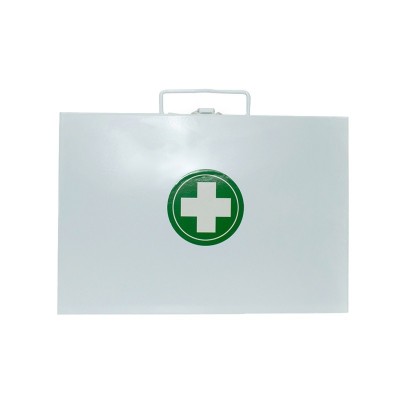
Essential medical consumables and replacement first aid components — wound care, bandages, gauze, dressings, tapes and refill supplies to restock and maintain every first aid kit.
ANSI First Aid Kit Refills: What Class A and Class B Rules Really Require in 2026
Nov 4,2026
During a hypothetical internal review against ANSI/ISEA Z308.1, a purchasing team finds that its industrial cabinet looks full. Bandages have been replaced, new wipe boxes are on the shelf, and the inspection tag has been signed. Yet the approved contents list calls for supplies that are missing, and the replacement order was selected only by its "50-person" description.
That is the practical challenge with ANSI first aid kit refills: a full-looking cabinet and a large piece count do not establish conformity.
Quick answer: Refill a kit against its selected ANSI/ISEA edition, class, component specifications, and site-approved inventory. Class A covers common workplace injuries; Class B provides a broader assortment and quantities for more complex or higher-risk settings. "50-person" is not a separate ANSI class, and oral pain-relief tablets are supplemental supplies rather than a universal Class A/B tablet minimum.
This article explains verified public guidance and shows how to calculate a refill order. It does not reproduce the full 2026 standard's minimum-fill table: the publicly accessible primary sources reviewed did not provide all of its numerical specifications. Check Table 1 and the relevant product clauses in the licensed standard before approving a 2026 conformity claim.
ANSI First Aid Kit Refills: How Class A and Class B Change What You Restock
Keep three decisions separate when buying refills:
Standard edition: Which version is named on the kit and in your purchasing specification?
Kit class: Is the selected contents specification Class A or Class B?
Site target: What extra stock or specialist supplies does the workplace assessment require?
Class A is not limited to offices. Class B is not determined solely by the word "industrial." ANSI's published explanation associates class selection with the complexity and hazards of the workplace; Class B includes a splint and tourniquet in addition to a broader supply provision.
ANSI/ISEA Z308.1 is a consensus standard. Federal OSHA's interpretation states that it has not been adopted as a mandatory standard under 1910.151. OSHA instead evaluates whether adequate supplies are readily available for the particular workplace. Check applicable state, activity-specific, and contractual requirements as well.
Class A and Class B refill comparison
Refill decision
Class A
Class B
Intended coverage
Common workplace injuries
More complex or higher-risk environments
Quantities
Verify the Class A minimum-fill column
Verify the Class B column; do not assume every quantity is simply doubled
Wound and burn supplies
Match each required item's specification
Check the broader quantities and assortment
Splint and tourniquet
Not identified as Class A minimum items in ANSI's public class summary
Included in the Class B assortment
Dimensions and volumes
Verify every relevant line
Class B does not mean every dressing must be larger
Oral analgesic tablets
Supplemental; no general class-based tablet minimum
Supplemental; no general class-based tablet minimum
Labeling and instructions
Check the selected edition and applicable component labeling
Apply the same verification process to the Class B configuration
The classification distinctions come from ANSI's public explanation; its separate contents article identifies oral analgesics as supplemental. The purchasing checks above are practical recommendations.
Verify the standard edition and class on the kit before ordering replacement supplies.
What changes for a 2026 purchasing specification?
ISEA identifies ANSI/ISEA Z308.1-2026 as the current edition. Its overview highlights English/Spanish first aid guides, clearer arterial-tourniquet criteria, and expanded guidance on training, mobile workers, and supplemental supplies such as naloxone and anti-choking devices.
For an existing cabinet, this means reviewing more than consumable quantities. A refill of bandages cannot update an outdated guide or establish that a retained tourniquet satisfies the new specification.
Record the edition in the refill purchase order. Avoid an unqualified "ANSI compliant" description that leaves the required version unclear.
Class B First Aid Kit Refill Requirements for High-Risk Industrial Sites
A Class B first aid kit refill should restore the required inventory while preserving the performance of each component. The final maintained kit is the important result; the refill carton alone may contain only a subset of supplies.
Use this receiving and restocking sequence:
Remove used, expired, damaged, or otherwise unusable products from the available-stock count.
Compare usable stock with the verified Class B list and the site's additional requirements.
Record substitutions before placing them into service.
Recount the finished kit and close the shortage record.
Common ways to reduce a kit's capability unintentionally include replacing a complete stock list with a smaller refill assortment, counting individual gloves as pairs, substituting smaller pads, or treating every type of wipe as interchangeable.
A training device or a band intended for blood collection should not be accepted as an arterial tourniquet simply because it fits the compartment. Obtain product-specific evidence against the applicable requirement. ISEA explicitly highlights tourniquet criteria in its 2026 update.
An item-by-item verification sheet
Use the following sheet to build the controlled refill specification. Enter the actual minimum quantities and dimensions from the selected standard; the table is a verification worksheet, not a substitute for its minimum-fill table.
Component to verify
Unit or specification to record
Adhesive bandages
Individual bandages; qualifying dimensions
Adhesive tape
Required length and applicable dimensions
Antibiotic applications
Number of qualifying applications; amount per application
Antiseptic applications
Number of qualifying applications; formulation and amount
Burn dressings
Individual dressings; dimensions and product specification
Burn treatment
Applications and amount per application
Cold packs
Packs and dimensions
Breathing barrier
Device type and required performance
Eye coverings
Individual coverings and attachment provision
Eye/skin wash
Total qualifying volume and labeling
First aid guide
Edition-appropriate guide and languages
Thermal blanket
Quantity and dimensions
Hand sanitizer
Applications and amount per application
Medical examination gloves
Pairs, sizes, and material specification
Roller bandages
Count for each required width and length
Scissors
Quantity and suitability
Splint
Class-specific requirement and dimensions
Sterile pads
Individual pads, dimensions, and package integrity
Tourniquet
Class-specific requirement and performance evidence
Trauma pads
Individual pads and dimensions
Triangular bandages
Count and dimensions
This worksheet combines the categories in ANSI's public overview with the thermal-protection and bleeding-control categories in ISEA's public material. It intentionally leaves unverified 2026 numerical fields for confirmation.
Restock to the verified list, and record every substitution before it enters service.
50 Person First Aid Kit Refill: Unit Counts and Tablet Minimums
A 50 person first aid kit refill describes a commercial product category. It does not tell you the ANSI class, standard edition, or minimum quantity of tablets.
For example, First Aid Only publishes both a 50-person Class A refill and a 50-person Class B kit under 2021-edition claims. Selected manufacturer-listed contents differ as follows:
Selected item
50-person Class A refill, SKU 91360
50-person Class B kit, SKU 91347
BZK towelettes
15
50
Burn dressing, 4 x 4 in
1
2
Cold pack, 4 x 5 in
1
2
Eye wash
1 fl oz
4 fl oz
Examination gloves
4 individual gloves = 2 pairs
8 individual gloves = 4 pairs
Trauma pads, 5 x 9 in
2
4
These are observed product contents, not ANSI minimum quantities, ORI POWER specifications, or evidence of 2026 conformity. One product is a refill and the other a complete kit; the comparison demonstrates why the same "50-person" description cannot determine the refill order.
For purchasing, normalize the units first:
Supplier pack
Normalized inventory
What it does not establish
1 box x 10 individually wrapped wipes
10 wipes
Whether each wipe qualifies as the required antiseptic application
1 box x 8 individual gloves
4 pairs
Whether all required sizes and product specifications are met
1 packet x 2 tablets
2 tablets
A suitable dose or an ANSI tablet requirement
1 carton x 10 two-tablet packets
20 tablets
A requirement to stock those tablets
1 bottle x 4 fl oz
4 fl oz of labeled product
Equivalence to every other eye-care product
There is no universal "50 workers = X pain-relief tablets" calculation. If the site elects to stock oral medication, set the inventory through its medication policy and applicable requirements. Keep tablet count, dose, and number of people separate. ANSI's public guidance places oral analgesics and other OTC medicines among supplemental supplies.
Units to add = max(0, approved target - usable units already in the kit) Boxes to order = round up(units to add / qualifying units per box)
As an arithmetic example, suppose the approved stock list calls for 50 qualifying antiseptic wipes, 17 remain usable, and each refill box contains 10. The shortage is 33 wipes, so four boxes supply 40. Restock to the approved target and record any reserve stock separately. This example does not independently establish the ANSI minimum.
First Aid Kit Refill BZK Antiseptic Wipes 10 per Box: Spec and Substitution Rules
A listing described as "first aid kit refill BZK antiseptic wipes 10 per box" gives you a product type and pack count. It does not establish full suitability.
BZK commonly refers to benzalkonium chloride. One manufacturer-submitted label published through DailyMed identifies a 0.13% benzalkonium chloride first aid antiseptic towelette. That is a product-specific example, not proof that every 0.13% wipe meets ANSI requirements or that the same formulation is required for every refill.
Before approving a SKU, check:
Intended use: The label identifies a first aid antiseptic suitable for the intended application.
Product specification: Formulation, strength, wipe dimensions, and delivered amount are documented.
Count and packaging: The box contains the stated number of usable, individually packaged applications.
Condition: Sachets are sealed and the product is within its applicable shelf life.
Instructions: Required warnings, directions, and storage information remain available to users.
Traceability: Product identity and relevant lot/expiry details can be linked to the supplied batch.
FDA's OTC labeling guidance explains the role of active ingredient, purpose, uses, warnings, directions, and other information. It also identifies net contents, manufacturer information, and lot or batch coding as label information.
Verify formulation, count, packaging, and labeling before accepting any substitute component.
When is a substitute acceptable?
Treat substitution as a specification review, not a price-only decision.
Proposed replacement
Procurement decision
Another BZK wipe with different packaging
Review the actual formulation, amount, labeling, performance, and usable count
Alcohol prep pad
Do not assume that an injection-preparation indication equals the required wound-care indication
Hand-sanitizing wipe
Do not automatically count it as a first aid antiseptic application
Surface-disinfectant wipe
Do not place it in the wound-care category on the strength of its "antibacterial" claim
Cleansing wipe without an antiseptic claim
Do not count it as a qualifying antiseptic without appropriate evidence
Antiseptic spray instead of wipes
Reassess formulation, application quantity, delivery format, labeling, and the selected standard
Document the reviewer, substitute SKU, specification comparison, and approval date.
An NDC number is not an FDA approval certificate. FDA states that NDC assignment and directory inclusion do not establish approval or verification of the submitted information.
Industrial First Aid Kit Refills vs Workplace First Aid Kit Refill: Which Spec Fits Your Site
"Industrial" and "workplace" are purchasing descriptions. A workplace first aid kit refill can serve a demanding industrial environment if its documented specification matches the assessed need.
Buying consideration
Lower-complexity workplace example
Higher-risk industrial example
Assessment focus
Common injuries, occupancy, and access
Machinery, heat, chemicals, separated areas, and response arrangements
Class selection
Evaluate whether Class A fits
Evaluate Class B and necessary additions
Stock target
Standard minimum plus justified operating stock
Standard minimum plus site-specific consumption and response stock
Refill method
Component top-ups or an appropriate complete refill
Controlled top-ups across multiple stations and shifts
Purchase trigger
Consumption, lead time, and upcoming expiry
The same factors, potentially with higher demand or longer supply routes
Inspection frequency
Follow guidance and site conditions
Increase checks when use or conditions justify it
These are planning examples, not industry-wide classifications or fixed purchasing schedules.
ISEA recommends checking kits at least monthly or after an incident involving product use. That recommendation is an inspection interval, not a requirement to buy an entire refill every month.
Keep a minimum compliance floor and an operating stock target as separate fields. Set the reorder trigger early enough to accommodate expected use during supplier lead time. This is an inventory-management recommendation, not an ANSI formula.
What Inspectors Check in Workplace First Aid Kit Refill Logs
OSHA's interpretation describes a workplace-specific assessment of adequate supplies and accessibility. It does not establish one universal refill-log template.
A useful internal record helps demonstrate what was checked and how shortages were corrected:
Log field
Example entry
Kit identification
Production / Station B-03
Date and responsible person
Inspection date and checker
Controlled specification
Edition, class, and approved contents-list revision
Stock check
Target, usable count, and shortage by item
Condition
Expired, damaged, or opened packages removed
Restocking
Replacement SKU, quantity, and date
Traceability
Relevant component lot and expiry information
Substitutions
Approved replacement and reviewer
Closure
Recheck date and outstanding action
This is an illustrative internal form. A signature is useful only when it corresponds to an actual check and completed corrective actions.
Section 1910.151 does not prescribe a specific retention period for refill inspection logs. Apply any relevant state, activity-specific, contractual, or company requirements; do not assume that retention rules for injury or employee medical records automatically apply to cabinet stock logs.
Frequently Asked Questions
Can a Class B kit use a Class A refill?
Individual replacement items can be used if they meet the required specification and the finished Class B kit retains every required item and quantity. A complete Class A assortment should not be assumed to restore a depleted Class B kit. Check the remaining stock and every shortage.
Do first aid refills need lot numbers?
Check the requirements for each component and packaging level. OTC drug labeling includes lot or batch information; medical devices and nonmedical accessories may follow different rules. Preserve applicable component identification. A refill-carton identifier should not be treated as a substitute for missing required component labeling.
How often should refills be checked?
ISEA recommends inspection at least monthly or after use during an incident. More frequent checks may be appropriate for high-use stations. Replace shortages and unusable items promptly rather than waiting for the next routine order.
Does a Class B refill require painkiller tablets?
Oral analgesics are supplemental in ANSI's public guidance, not a general Class B tablet minimum. Do not confuse topical antibiotic or burn-treatment applications with oral medication.
Will one 10-count BZK box restore the antiseptic stock?
Only if the verified shortage is no more than 10 qualifying applications and the product meets the specification. Calculate the actual shortage after excluding expired or unusable stock.
Does restocking a 2021 kit make it 2026 compliant?
Not automatically. Review the complete kit against the selected 2026 requirements, including retained equipment, labeling, and the guide. Replacing consumables alone does not establish conformity.
Build a Controlled Refill Program with ORI POWER
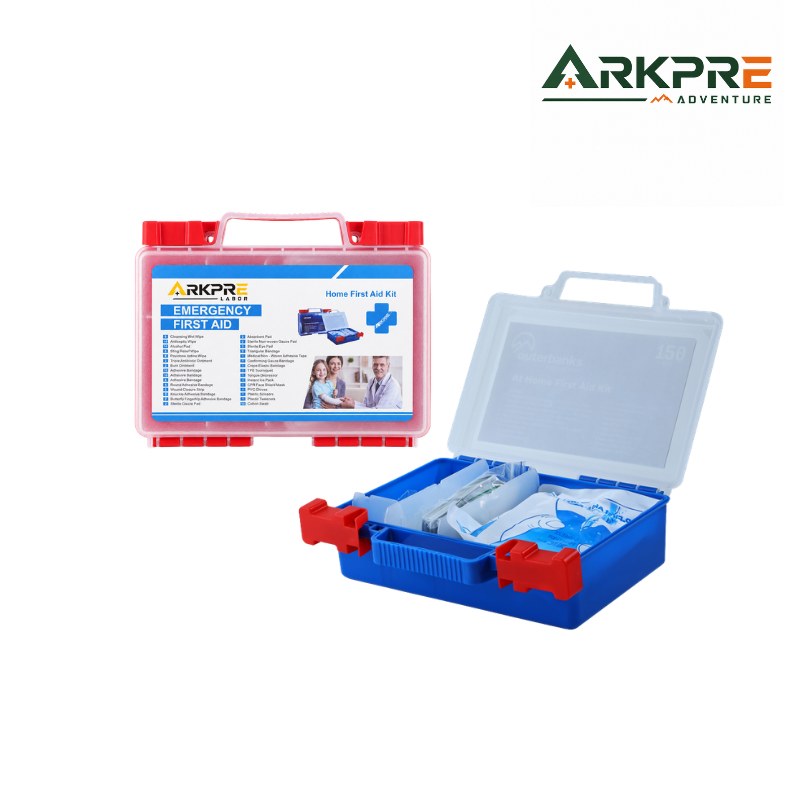
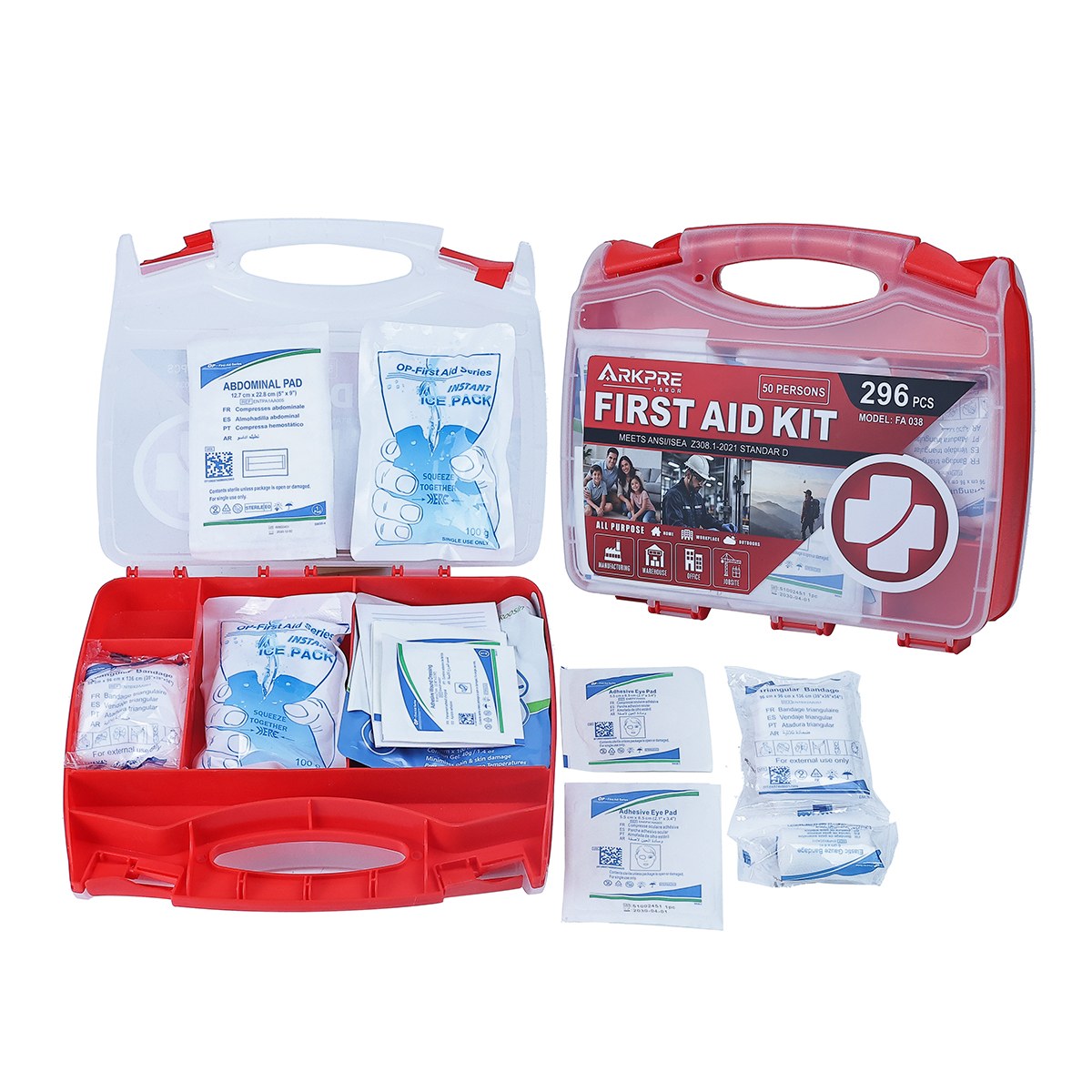
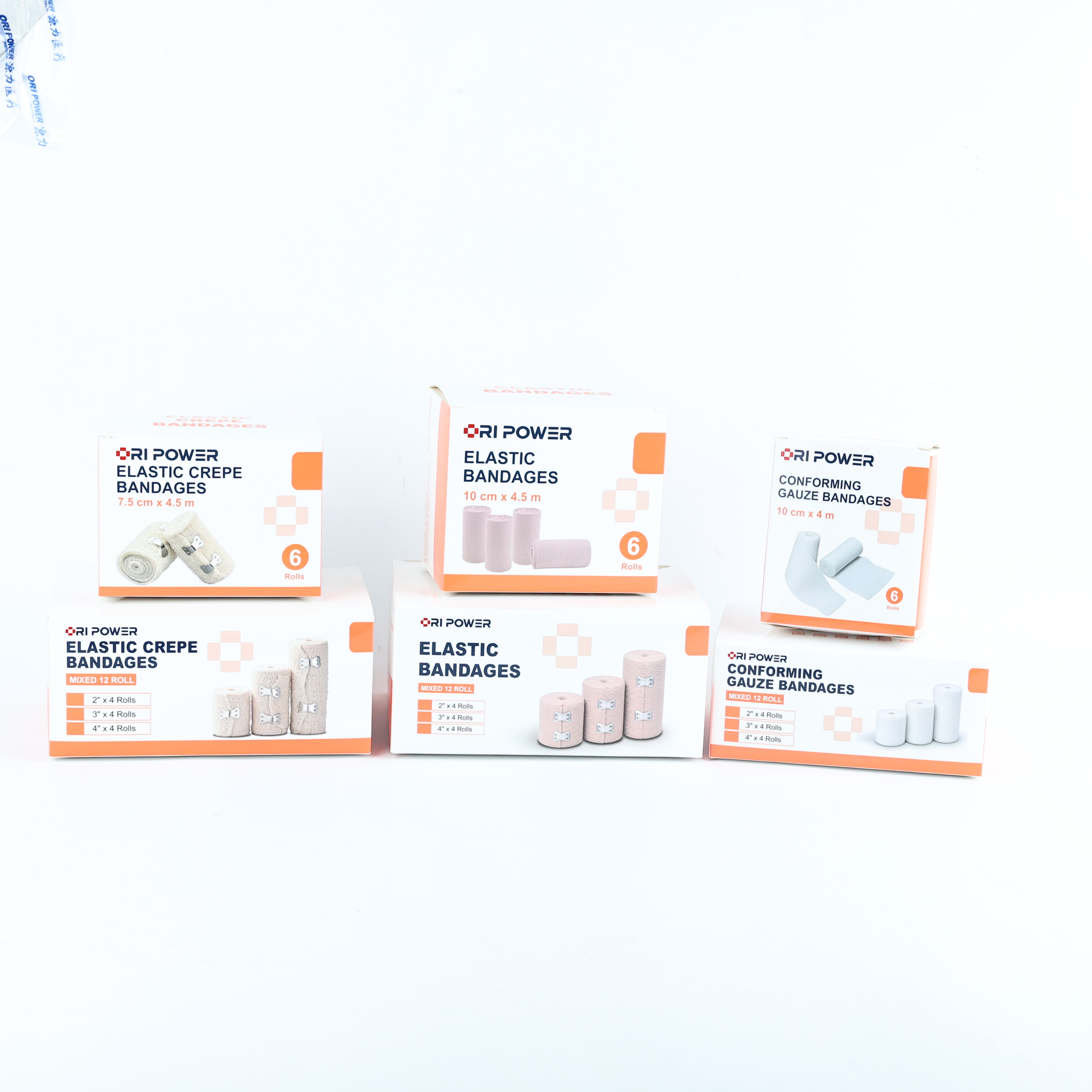
ORI POWER offers workplace refill packs, replacement components, and customized packaging options through its ARKPRE Labor range. Start with the approved kit specification so that each replacement order has a clear purpose.
For a quotation, share the kit class and edition, bill of materials, station quantities, required labeling, packaging format, and remaining-shelf-life expectations.
Request a Class A/B refill comparison worksheet and discuss a specification-matched refill program.
Contact amychen@ori-power.com. Confirm product-specific evidence before making a conformity claim.
Reviewed November 4, 2026. The opening scenario is hypothetical. Commercial product examples illustrate pack-count differences and are not independent certification findings. This article uses public primary sources and does not claim access to the complete licensed 2026 standard.